How to Give Her Space Without Making Things Worse: A Partner’s Playbook
The first time my partner said I just need to be alone for a bit, I made it worse in three separate ways inside of forty-five minutes.
First, I asked what was wrong. Then, when she said nothing, I just need space, I asked twice more, in two different tones, like I was looking for a hidden door in the same wall. Then I sulked in the kitchen loudly enough that she could hear me being lonely. By the time I finally left the apartment to walk around the block, she didn’t need space anymore — she needed a different person.
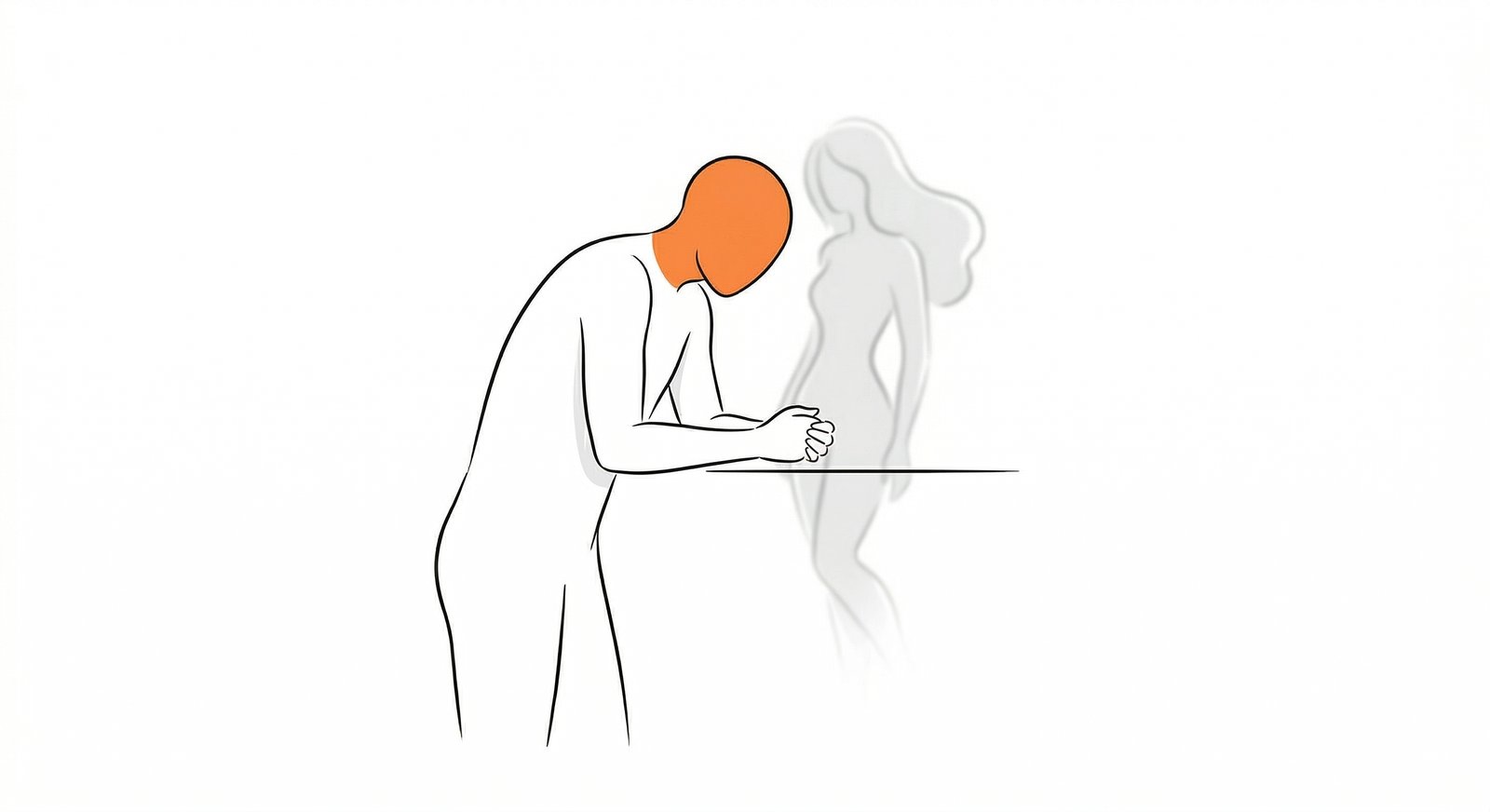
I learned something that night that took me years to fully accept: giving someone space is a skill, not the absence of one. Most men I know — me first — were never taught it. We were taught to fix, hover, perform concern. None of those things are space. They’re the opposite of space, dressed up to look like care.
If you’ve ever had your partner ask you to back off and felt the floor go sideways under you, this is for you. We’re going to look at what’s actually happening when she pulls away, why your instincts are wrong, and what a partner who knows how to give her space actually does.
“Space” isn’t the silent treatment. It’s regulation.
Here’s the reframe that fixed half of this for me: when your partner asks for space, she’s not punishing you. She’s regulating herself.
The Gottman Institute calls the bad version of this dance the pursuer-distancer dynamic — one partner retreats to manage their stress, the other partner reads the retreat as a threat and pursues harder, the first partner retreats further, and round and round it goes. It’s one of the most reliable predictors of marital dissatisfaction in their research. And the thing that breaks the loop isn’t more pursuit. It’s the pursuing partner learning to stop pursuing.
Why does she pull away in the first place? Because a brain under stress doesn’t want stimulation — it wants quiet. Research on solitude finds that time alone has a deactivation effect on the nervous system: it lowers high-arousal emotions like anxiety and replaces them with low-arousal states like calm. That’s not avoidance. That’s the body’s reset button.
When you keep talking, keep asking, keep “checking in,” you’re not helping her reset. You’re standing next to the reset button with your finger over it, asking if she’s pressed it yet.

Where the cycle quietly plays in
Here’s a thing I wish more partners understood: sometimes she doesn’t just need space on a random Tuesday. Sometimes she needs more of it for about a week every month, and neither of you may have connected the dots.
In the luteal phase — roughly the second half of the cycle, after ovulation and before her period — the brain changes how it processes social input. Research on luteal-phase social orientation finds increased sensitivity to social feedback, more inhibitory response in interaction, and a stronger pull toward self-referential processing. Translation: more of her attention turns inward. The same dinner-party energy that felt fun a week ago can feel like sandpaper now.
Social withdrawal also shows up specifically as a documented PMS symptom, alongside irritability and low mood. None of this is in her head. None of it is about you.
What this means in practice: if she’s pulling away and the timing roughly tracks a pattern, the kind move is to make space the default, not to keep proposing the same plans she didn’t want last cycle. If you already track her cycle with her consent, you’ll start spotting it. If you don’t track yet, the simpler version is this: when she says she needs less, believe her — and don’t make her pay for it two days later when she wants more again.
(For the longer biology of what’s happening in those days, the luteal phase explainer breaks it down.)
The four ways men screw this up
I’ve done all four of these. So have most of my friends. We don’t see them as making it worse because they all feel like effort. That’s the trap.
1. Hovering. You give her physical space but keep texting. Are you okay? Just checking. I’m here. Just say the word. Each one is a soft pull on the rope you just said you’d let go of. She has to either reply (which costs her the rest she was getting) or not reply (which becomes its own emotional thing she now has to deal with).
2. Sulking loudly. You agree to give her space, but you do it dramatically — slamming a cabinet door, sighing audibly, walking past her room and not making eye contact. You’re not giving her space. You’re making her feel guilty about needing it.
3. Weaponizing the next conversation. When she comes back, the first thing out of your mouth is well, you were really cold to me earlier. You’ve now made the cost of asking for space — punishment when she returns. Next time, she won’t ask. She’ll just disappear into her phone for a week.
4. Going subterranean. The overcorrection. She asked for an hour; you give her a wall of silence for two days because you don’t know what “the right amount” is. Now she’s not getting space — she’s getting cut off, which is a different thing and feels much worse.
The common thread: all four are about managing your own discomfort. That’s the work to do, and it’s the work most of us were never taught.

What actually works: a four-step move
Forget choreography. The real move is mostly internal. But here are the four external pieces that hold it together.
Acknowledge once. Don’t audition.
When she says she needs space, say something like Okay. I’ll give you that. Tell me when you want company again. That’s it. One sentence. You’re not auditioning for husband-of-the-year. You’re confirming you heard her and stepping back. If you try to perform too much understanding, she’ll hear it as pressure to come back and validate your performance.
Stay reachable, not present.
There’s a difference between “I’m not in the room” and “I have vanished off the earth.” Don’t text every twenty minutes. Don’t text not at all, either, especially if you live separately. One mid-evening thinking of you, no need to reply is fine if you genuinely mean the no-need-to-reply part. Test that line by writing it and then actually putting your phone down for two hours.
Manage your own state.
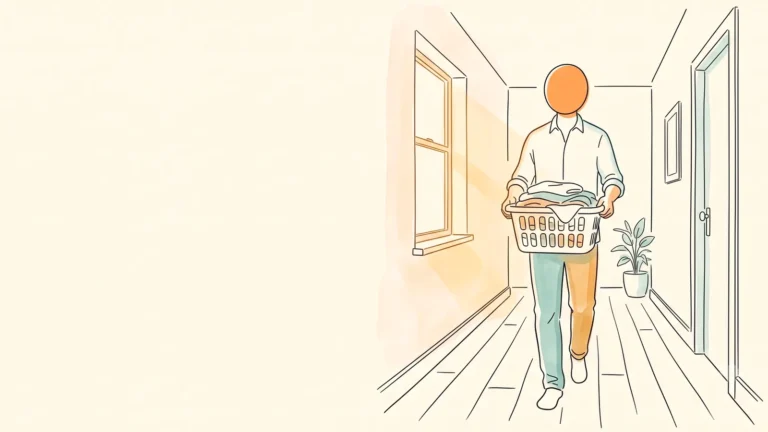
The hard part. While she’s regulating, your job is to regulate too. Go for a walk. Lift something heavy. Cook. Call a friend. Don’t sit on the couch staring at the door waiting for her to emerge so you can have your conversation. That’s pursuit dressed up in patience.
What you’re avoiding is what psychologists studying conflict call flooding — the physiological state, with elevated heart rate and stress hormones, that makes it impossible to think clearly. If she came to you flooded, more talk would make it worse. If you sit there with your own version of flooding building up, you’ll detonate the moment she opens the door. Get your nervous system down to normal first.
Welcome her back without scoring.
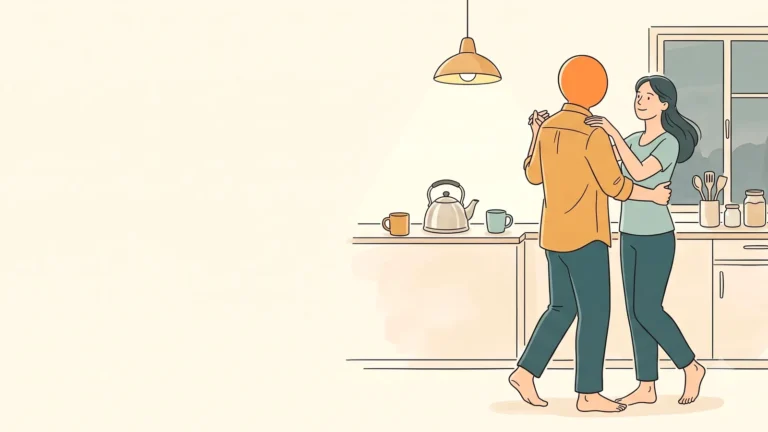
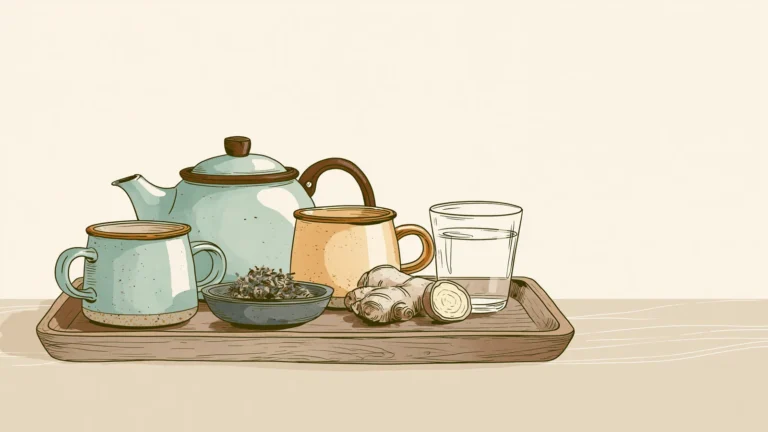
When she comes back, the only job is: be normal. Make tea. Ask if she wants to watch something. Don’t say so are we okay? Don’t say do you want to talk about what happened? Don’t do the wounded-spaniel face. She’ll either bring it up or she won’t, and most of the time the right move is to just live the evening like the storm passed — because for her, it did.
If something does need to be unpacked, do it the next day, calmly, with a cup of coffee. Not in the doorway of the room she just walked out of.
The hardest part is what nobody tells you
Here is what made this actually click for me: giving her space isn’t a favor you do for her. It’s a trust deposit.
Every time you can hear “I need to be alone” without taking it personally, without making her pay for asking, without disappearing into a wounded silence — you’re proving something. You’re proving that asking you for space doesn’t cost her. And when asking for space doesn’t cost her, she’ll ask earlier and more honestly next time, before the resentment builds, before the small thing becomes the big thing.
The opposite is also true. A man who can’t be left alone in his own apartment for an hour without sulking, hovering, or punishing — that’s a man women hide from to get the rest they need. They don’t divorce that man right away. They just stop telling him when they need anything.
You don’t want to be that man. None of us do. But the only way out is through the discomfort: sitting with the unromantic, twitchy feeling of being asked to back off, and not making it about you.
The smallest practice
Try this the next time she says she needs space. Set a phone timer. Whatever she asked for — an hour, an evening, a Saturday afternoon — don’t initiate anything for the entire window. Not a text. Not a “checking in.” Not walking past her line of sight three more times than necessary. Use the time on yourself: something physical, something useful, something that isn’t sitting at the kitchen table thinking about her.
When the timer ends, don’t pounce. If she comes out before, be normal. If she doesn’t, give her another thirty minutes and then offer something small and low-stakes — food, a question about a show, anything that lets her step back in without making a speech.
Do this five or six times across a few months and you’ll feel something shift. Not in her — in you. The shape of the discomfort changes. The instinct to fix gets quieter. You start trusting that her stepping away isn’t the end of anything; it’s just weather passing through.
That’s the upgrade. Not a hack, not a script — a different relationship to her stepping back.
If you want a quiet tool that helps you spot the patterns underneath the “I need space” days — the cycle phase, the sleep, the things that stack — that’s part of why I built PeriodBro. It’s not for surveillance. It’s for noticing more so you intrude less. One cycle, free. See if anything clicks.
The room is quiet. You’re not in it. She is. That’s the whole job, most days.
Most days, it’s enough.