The Best Foods to Have at Home Before Her Period (A Partner’s Pre-Stock List)
The best foods to have at home before her period aren’t exotic — they’re the ones already in most kitchens, just in the right combinations. Most “showing up” isn’t a speech or a grand gesture — it’s having the right things in the fridge before she has to ask.
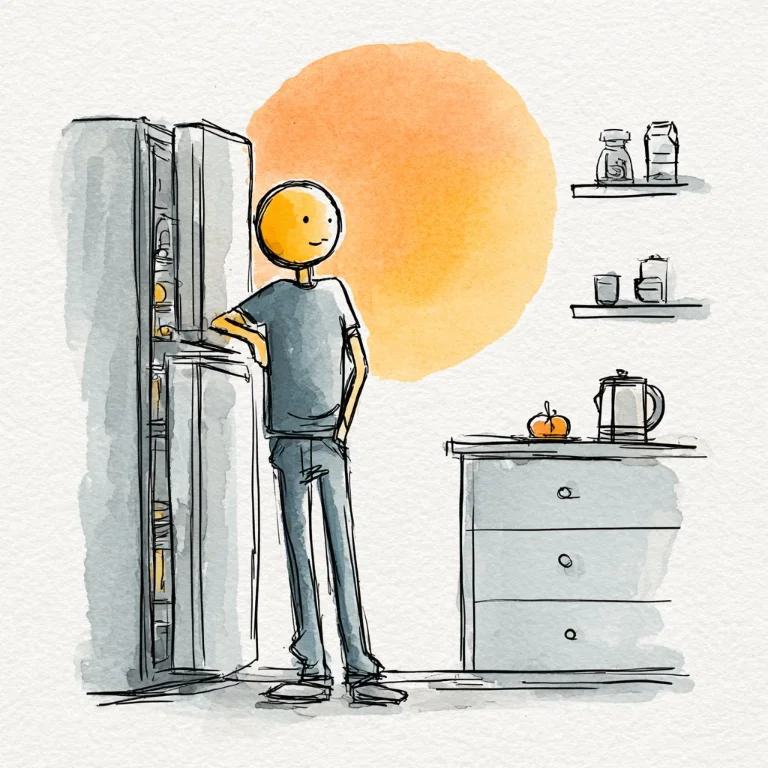
She opened my fridge, looked at the three beers and a takeout container, and quietly closed it. I didn’t connect the moment until two days later, when her period started. What I’d seen wasn’t pickiness. It was depletion. Her body wanted iron, magnesium, warm carbs. My fridge had none of it.
The thing nobody tells you about being a good partner is that half of it is logistics. Most of “showing up” isn’t a speech or a grand gesture — it’s having the right thing in the cupboard before anyone asks for it. You don’t need to cook. You need to stock.
This is a grocery list, not a cookbook. It works whether you live together or whether she’s coming over on Friday. The point: by the time the harder days arrive — roughly the four to five days before bleeding starts, plus the first day or two of the period itself — the kitchen is already set up. Nobody has to make a decision at 9pm.
Best Foods to Have at Home Before Her Period: The Short Map
In the second half of the cycle (the luteal phase, roughly Day 15 to Day 28), progesterone climbs and then drops sharply. Serotonin tends to drop with it. Iron is on its way out the door as the period begins. The brain reaches for carbohydrates because carbs help shuttle tryptophan across the blood-brain barrier, which is part of how serotonin gets made. The body reaches for minerals — calcium, magnesium, iron — that are measurably lower in many people with PMS (ACOG, PMC review on calcium).
This isn’t a vague “she needs comfort food” thing. There’s biochemistry behind why a bag of M&Ms feels good and a salad feels like a punishment. In controlled studies, acute tryptophan depletion has actually been shown to worsen premenstrual irritability (PubMed). The cravings are signal, not weakness.
So the move is to stock the foods her body is already asking for — and quietly remove the ones that backfire.
The five things to actually buy
Forget pink-packaged “wellness for women” products. The aisles you want are boring.
1. Iron — the missing mineral by Day 1
The average period loses around 30-40 mL of blood, and with it, roughly 1 mg of usable iron. Heavier periods can lose five or six times that (PMC: iron deficiency in females). Low iron shows up as fatigue, brain fog, cold hands — the stuff that looks like a bad mood and is, in fact, a depleted bloodstream.
Buy: red meat (beef, lamb), dark poultry (chicken thigh), liver if she’s into it, lentils, chickpeas, tofu, spinach, pumpkin seeds. Pair plant iron with vitamin C — bell peppers, citrus, kiwi — so the body can actually absorb it.
The full dinner version: a steak with roasted sweet potato and something green. The cheap version: lentil soup with a squeeze of lemon.
2. Magnesium — the cramp/mood/sleep mineral
ACOG notes that magnesium “may help reduce water retention (bloating), breast tenderness, and mood symptoms” (ACOG PMS page). You don’t need pills if the cupboard is right.
Buy: pumpkin seeds (king of magnesium), dark chocolate at 70% or higher, almonds, cashews, spinach, black beans, avocado, oats.
The fastest delivery: a square of dark chocolate after dinner. The breakfast version: oats with almond butter and pumpkin seeds.
3. Calcium — the boring miracle
In randomized trials and clinical reviews, ~1,200 mg/day of calcium has been linked to fewer and milder PMS symptoms (PMC: calcium and PMS). It’s also one of the few supplement strategies ACOG actually mentions favorably.
Buy: plain yogurt, kefir, hard cheese, milk if she does dairy. If she doesn’t: fortified oat or soy milk, tahini, canned sardines, kale, broccoli, almonds.
The easy version: a bowl of yogurt with a spoon of honey and seeds at breakfast. Quiet, reliable, not a project.
4. Complex carbs — the serotonin bridge
This is the one most partners get wrong. They see her reaching for pasta or bread and assume she’s “off her diet.” She isn’t. Carbohydrates help tryptophan cross the blood-brain barrier, which is part of how serotonin gets made. Carb-rich meals in the late luteal phase have been shown in trials to improve mood, calmness, and alertness in people with PMS (PubMed: carbohydrate beverage trial).
Buy: oats, brown rice, sweet potatoes, whole-grain sourdough, bananas, pasta. Pair them with a little protein so blood sugar doesn’t spike and crash.
The dinner version: pasta with olive oil, parmesan, and either grilled chicken or chickpeas. Comfort that doesn’t feel like surrender.
5. Warm and soft — for the days the body doesn’t want to chew
By the first day or two of the period, plenty of people don’t want a full plate. They want something warm that goes down easy. Soup, congee, oatmeal, scrambled eggs, a baked potato, broth with rice. This isn’t pampering — it’s removing the friction of having to think about what to eat.
Buy: a couple of cans of decent soup, a quart of bone or vegetable broth, a sleeve of rice cakes, a jar of good honey, ginger tea, a small ginger root (anti-nausea, anti-cramp), and a bag of frozen berries.
(If she’s already in the cramping window, the day-of playbook for cramps usually starts with one of these.)

The two things to quietly keep out of the cart
You don’t need to be a food cop. Just don’t restock the things that backfire.
Excess caffeine. Caffeine can sharpen anxiety and disrupt sleep in the luteal window, when both are already shakier. You don’t need to throw out the coffee maker. But maybe don’t bring home a new family-size box of energy drinks the week of Day 24.
Alcohol on the hard days. Alcohol interferes with iron metabolism and disrupts sleep architecture, which is the last thing a fatigued body needs. If a glass of wine is part of your evening, keep it small. If it’s a way to “take the edge off” the harder days, that’s a different conversation — and not one a fridge can fix.
A small note on salt and ultra-processed snacks: they aren’t moral failures, but they amplify bloating and breast tenderness, which are already running hot in the luteal phase. Have them around if she likes them. Just don’t make them the only easy option.
The actual list
Print this. Take it to the store on a Saturday. It costs roughly €30-€50 depending on the country.
- 1 bag baby spinach
- 1 bunch bananas
- 2 sweet potatoes
- 1 bag oats
- 1 carton plain yogurt (or kefir)
- 1 bag pumpkin seeds
- 1 bar dark chocolate (70% or higher)
- 1 jar almond butter
- 1 small piece beef or chicken thigh — or 1 bag lentils
- 1 lemon
- 1 piece ginger root
- 2 cans soup (lentil, butternut, chicken & rice)
- 1 box ginger tea
- 1 box pasta + 1 jar of decent tomato sauce + parmesan
- 1 bag frozen berries
Optional but underrated: a small bag of frozen edamame, a tub of hummus, a fresh loaf of bread.
That’s it. You’re done.
When to do this
If you’re tracking her cycle (gently, and with consent), you already know. If you’re not, here’s the heuristic: most cycles run 26 to 32 days. The harder window is the four to five days before the period starts, plus the first day or two of bleeding. So the store run wants to land somewhere around Day 22-25 — or in plain English, “the weekend before you expect it.”
If you live alone and she’s coming over: stock by Friday for a weekend, by Sunday night for the work week.
If you live together: there’s a quieter rhythm where the cupboard gets re-stocked in the week between ovulation and PMS, without it ever being announced. That’s the version that compounds.
What this actually does
The point isn’t that food fixes PMS. It doesn’t. PMS is real, and for some people it’s heavier than nutrition can touch — when it crosses into PMDD, that’s a clinical conversation, not a grocery one (more on PMS vs. PMDD).
The point is that you remove one friction point. She doesn’t have to think about what’s for dinner on the day she least wants to think. She doesn’t have to “find something” in a kitchen that has nothing for her. The thing she sees when she opens the fridge is a thing she can use.
That’s not romance. It’s logistics.
And the thing about logistics is — it’s contagious. Once the fridge stops being a problem, you notice the other small frictions. The painkillers in the cupboard before she asks. A blanket already on the couch. The kettle pre-filled.
She probably won’t thank you for the bag of pumpkin seeds. That’s fine. You’ll see it in her face two days from now, when there’s one less small thing for her to figure out.
That, multiplied by twelve months, is the relationship most people are trying to describe when they say “he just gets it.”