

Best Menstrual Cup: A Partner’s Buying Guide
She texted me one word from the bathroom: “cup.” No context, no size, no brand. I stood in the family planning aisle at the drugstore for ten minutes, staring at five boxes with names like they were craft beers, before I gave up and just bought two different sizes so at least one would be right.
I got lucky. One of them worked. But I spent the drive home wondering why nobody had ever explained the basics to me before I needed them at 9pm on a Tuesday. Cycle tracking eventually filled that gap for me, but the cup itself stayed a mystery for another year.
That’s the thing nobody tells you about menstrual cups: the buying part is genuinely confusing, even for the person using one, let alone the partner sent to fetch it. If you’re trying to figure out the best menstrual cup to grab, or you just want to understand what you’re looking at the next time you’re asked, here’s what actually matters.
What a menstrual cup actually is
A menstrual cup is a small, flexible cup, usually made of medical-grade silicone, that sits inside the vagina and collects period blood instead of absorbing it. That’s the core difference from a tampon or pad: it collects rather than absorbs, which is part of why it can be worn longer between changes (Cleveland Clinic).
In the US, menstrual cups are regulated by the FDA as Class II medical devices, which means manufacturers have to clear a premarket review process and follow labeling and manufacturing rules before the product can be sold. That’s a meaningfully higher bar than pads or period underwear sit under, and it’s part of why “which brand” questions matter less than “which size” questions (FDA).
How much it actually holds, compared to what you already know
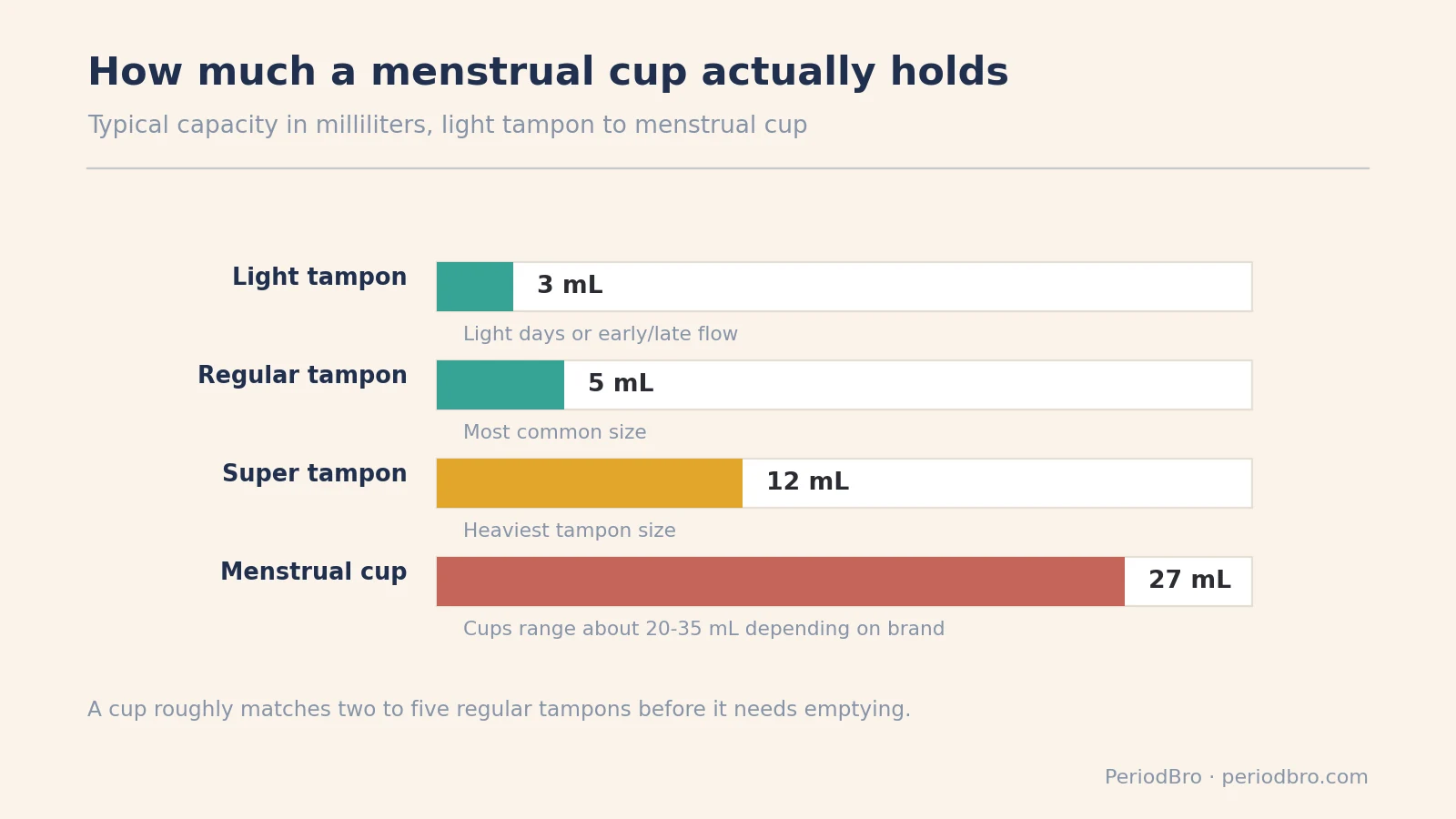
This is the part that made the aisle standoff make sense to me. Tampons come in sizes because they hold different amounts: a light tampon holds around 3 mL, a regular around 5 mL, and a super around 12 mL. Most menstrual cups hold somewhere between 20 and 35 mL, per lab testing of popular cup brands, which is roughly the equivalent of two to five regular tampons before it needs emptying (PMC, red blood cell capacity of modern menstrual products).
That capacity gap is the actual selling point, not marketing spin. Fewer changes during the day, and for a lot of people, one cup gets them through a full workday without a bathroom trip built around it.
Sizing: the part that actually determines whether she’ll like it
If there’s one thing worth getting right, it’s size, because it’s the single biggest reason people try a cup once and never touch it again. Sizing generally comes down to three things: age, whether she’s given birth vaginally, and cervix height. Smaller sizes are typically recommended for people under 30 who haven’t given birth, and larger sizes for people over 30 or who have had a vaginal delivery, though this is a starting point, not a rule, since bodies vary a lot within those categories (Medical News Today).
Cervix height matters too. A cup that’s too long for a lower cervix will feel like it’s constantly poking at something, and a cup that’s too short for a higher cervix can be hard to reach for removal. That usually means the cup’s length is wrong for her, not that anything is wrong with her body (Cleveland Clinic).
If she’s never used one, the honest move is to let her pick, or at most bring home a size-inclusive starter option and let her figure out fit through trial. Don’t treat the first cup as the last cup. Most people who stick with cups long-term went through one that didn’t quite work before they landed on the right one.
There’s also a basic mechanics question worth knowing, because it comes up more than you’d think: the cup gets folded before insertion (there are a few common fold styles, and most brands include a diagram in the box), then it pops open and creates a light seal once it’s in place. Removal means pinching the base to break that seal first, not just pulling. That one detail, breaking the seal before pulling, is the difference between an easy removal and a genuinely bad five minutes.

One thing that trips people up early on: emptying a cup in a public restroom without a sink in the stall. Most people either carry a small bottle of water to rinse with, use a wipe as a stopgap, or just empty it and reinsert without a full rinse until they’re somewhere with a sink. None of those is wrong. It’s a logistics problem, not a hygiene failure, and it usually stops being a thing people think about after the first few cycles.

The cost math, if that’s what tips the decision
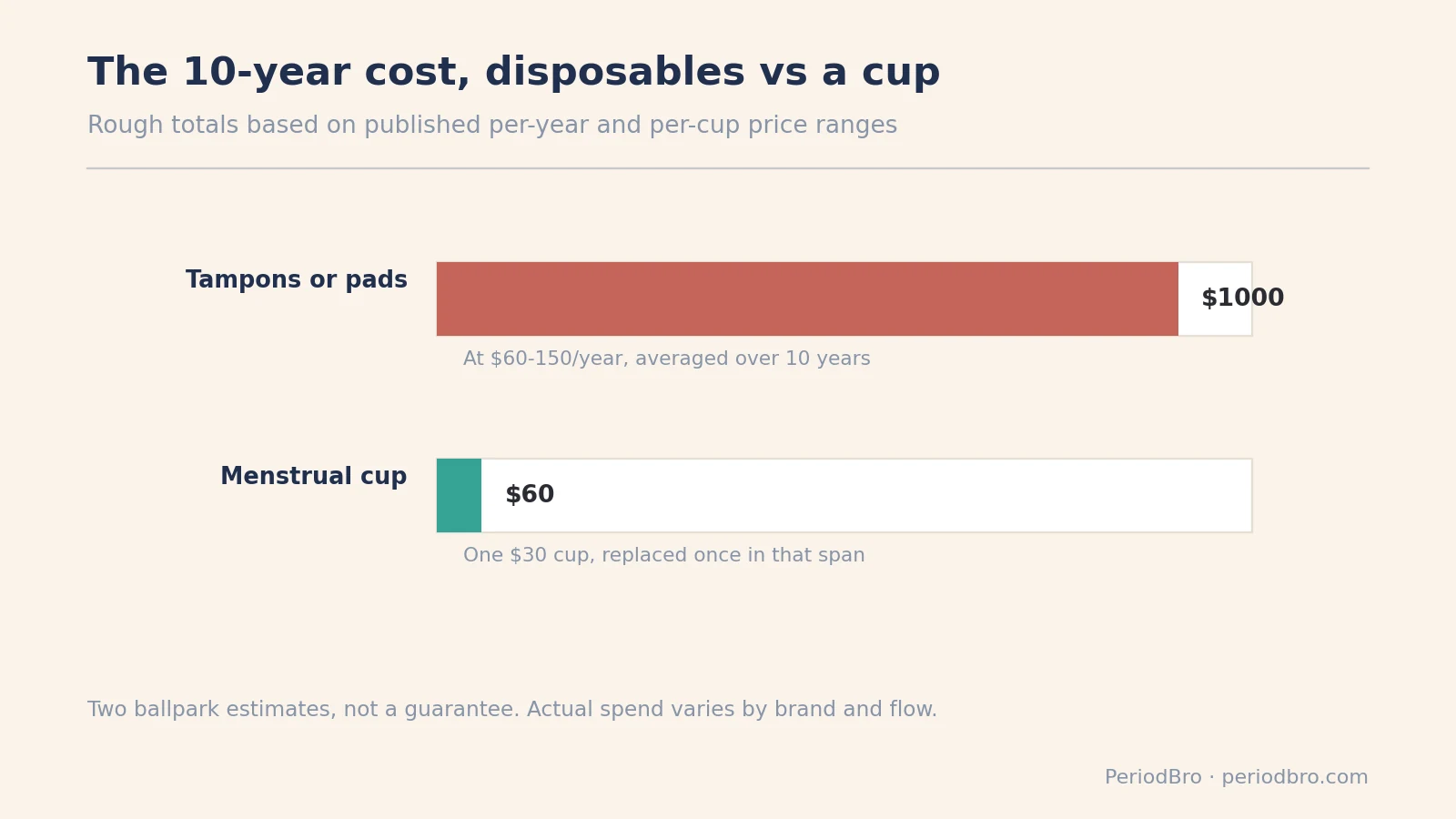
The case for a cup gets less abstract once you look at the actual numbers. The average person spends somewhere between $60 and $150 a year on tampons or pads. A menstrual cup runs $20 to $40 and, with proper care, lasts anywhere from a few years up to a full decade before it needs replacing. Run that out and disposable spending can cross $500 to $1,000 over a decade, against one $30 purchase that might get replaced once in that same span (Mayo Clinic Health System).
I’m not going to pretend the cup is the obvious answer for everyone, because comfort and habit count for a lot. But if the conversation ever comes up as “why does this keep costing us money every month,” the math is real. Bring it up once. Don’t lecture.
There’s a waste angle too, separate from the money. One cup replacing a box of tampons every month for years means a lot less packaging and product going into the trash over a decade. Most people don’t switch for that reason, but they tend to appreciate it once it happens.

How it stacks up against the other stuff we’ve covered here
A cup isn’t the only route to fewer changes and lower cost. We’ve already gone deep on period underwear as a buying category, which solves a similar “fewer trips to the bathroom” problem without anything internal at all, and on what a period subscription box actually gets you if the goal is just never running out of supplies. None of these are competing for the exact same use case. A cup is the highest upfront learning curve and the biggest long-term savings. Underwear is the lowest learning curve and works well as a backup layer with almost anything else. A subscription box solves a logistics problem, not a product problem. If you want the fuller rundown of what’s actually worth having on hand, our guide to period products for partners walks through all of it side by side.
Cleaning and safety: the part worth actually knowing
This is where I’d push back gently on the idea that a cup is “set it and forget it.” It still needs care. Between uses during the same cycle, rinse it with water and mild soap. At the end of a cycle, sterilize it in boiling water before it goes back into storage (Cleveland Clinic).
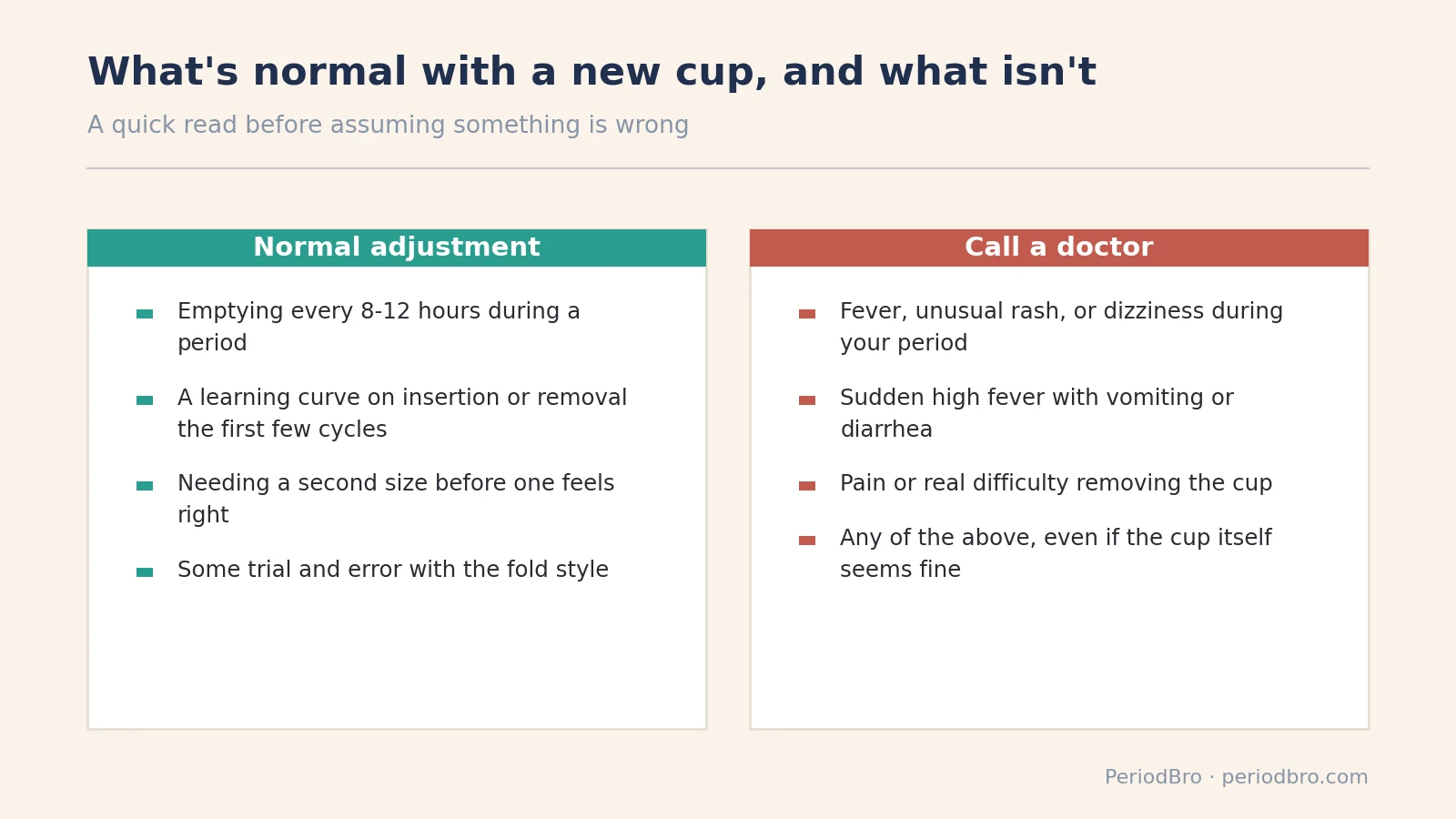
Most guidance recommends emptying a cup roughly every 8 to 12 hours, less often if the flow is heavy. Toxic shock syndrome from a menstrual cup is rare, and research suggests the risk is very low when a cup is used and cleaned as directed, but it isn’t zero, and cases have been documented, generally tied to cups left in past the recommended window or inconsistent cleaning (NIH / PMC on menstrual cup-associated TSS). We’ve covered what TSS actually looks like in more depth if you want the fuller picture of the warning signs.
So what’s the best menstrual cup to actually buy
If she’s asked you to grab a specific brand, get that brand. If she’s asked you to just “pick one,” don’t. Bring the sizing factors above back to her and let her make the call, or buy a starter multi-pack if the store carries one. Buying the wrong size is a minor miss. Buying it with total confidence and getting it wrong anyway is the version that actually stings.

None of this replaces her figuring out what actually feels right in her own body. What you can do is show up informed enough that the conversation isn’t a blank stare in a drugstore aisle. That’s most of it.
If you’re already tracking her cycle to know when this conversation is even coming up, PeriodBro is built for exactly that, so you’re not caught off guard by a one-word text with no context.
PeriodBro provides educational information and is not a substitute for professional medical advice. Always consult a qualified healthcare provider for personal medical decisions, including which menstrual product or cup size is right for you.