How to Support Girlfriend on Her Period: A No-Nonsense Guide for Partners
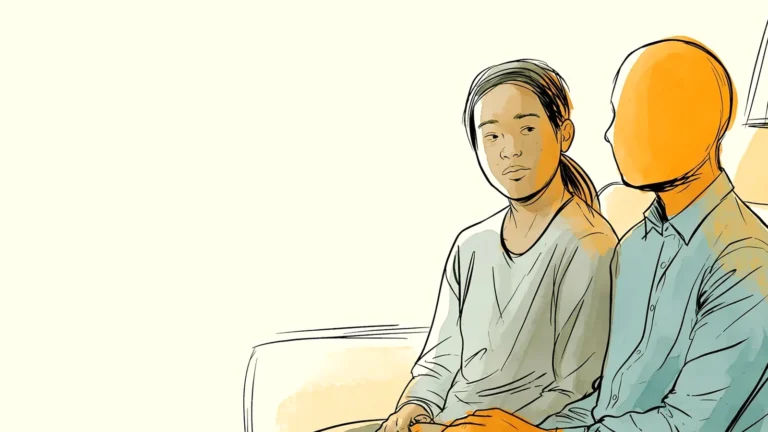
Learning how to support girlfriend on her period isn’t taught anywhere. Not in school, not by your father, not by example. Most of us figure it out the hard way, which usually means getting it wrong a few times while she’s already not feeling great. The first time my girlfriend had a bad period around me, I did what most guys do. I asked if she was okay. She said she was fine. I believed her. Twenty minutes later I said something stupid, she cried, and I spent the rest of the evening convinced I’d done something wrong without having any idea what it was.
I wasn’t a bad partner. I just had no idea what was actually happening, and no one had ever told me what to do. That’s the gap this guide is built to close. It’s the long version: a complete, practical playbook for showing up well across her whole cycle, not just the days she’s bleeding. No lecture about being more sensitive. Just the stuff that works, in the order you’ll actually need it.
How to support girlfriend on her period: the short version
If you only read one paragraph: most period support isn’t emotional, it’s logistical. Know roughly where she is in her cycle, stock the basics before she asks, offer help once and then back off, and don’t try to fix the pain. That’s the spine of it. The rest of this guide unpacks each piece, adds the phase-by-phase detail, walks through the specific situations you’ll hit, and tells you when something is worth a doctor rather than a heating pad.
Why most men get this wrong
The problem isn’t a lack of caring. Most men genuinely want to help. The problem is that we’ve never been given a framework. We either overcorrect, hovering and asking every five minutes if she’s okay and treating her like she’s fragile, or we undercorrect, pretending nothing’s happening and then acting confused when tension builds.
Neither works. What works is being quietly, steadily present. Not dramatic. Not checked out. Just there, prepared, and not making it weird. And it genuinely matters: in one controlled study, simply educating male partners about the premenstrual phase led, three months later, to measurably lower physical and psychological PMS symptoms in their partners and higher supportive-behavior scores from the men (spousal support study, 2017). Your knowing what’s going on is not a small thing. It changes her experience of it.
Here’s how to actually do that, starting with the map.

What’s happening, phase by phase
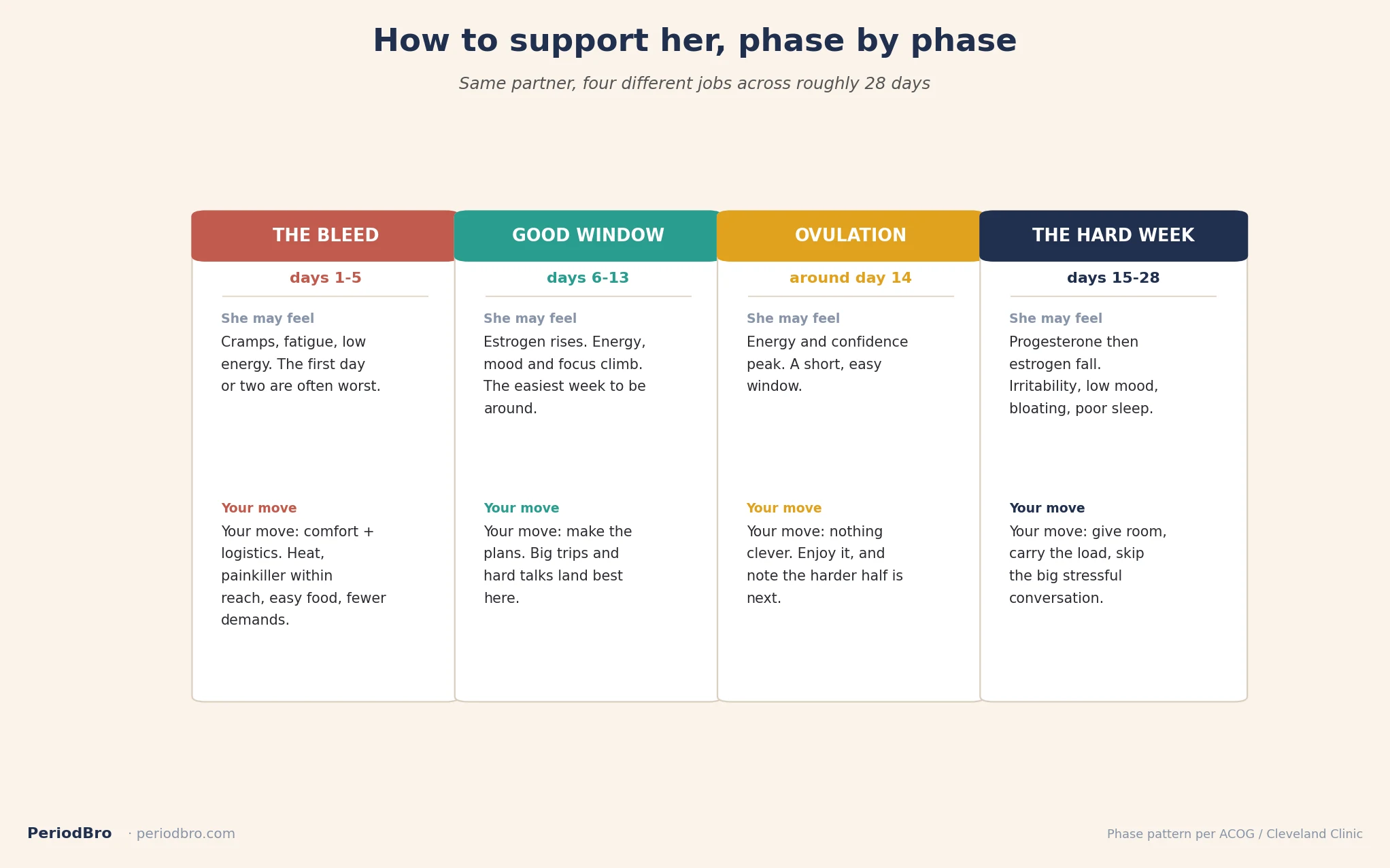
Support starts with knowing what week it is. Her cycle runs around 28 days on average, though anywhere from 21 to 35 is normal (ACOG). It moves through four rough phases, and each one asks something slightly different of you. You don’t need to memorize the biology. You need to know what she’s likely feeling and what your move is.
The bleed (menstruation): roughly days 1 to 5
This is the part you already know is happening. Cramps, fatigue, low energy, and for many women the first day or two are the worst. The cramps are caused by prostaglandins, the compounds that make her uterus contract to shed its lining. That’s why anti-inflammatories help and why this is a comfort-and-logistics week, not a problem-solving one.
Your move: lower the friction. Heat, painkillers within reach, easy food, fewer demands on her energy. If she’s in real pain, this is the week to quietly take over the chores and stop expecting her to be at full capacity. More on the specifics in how to help with period cramps.
The good window (follicular phase): roughly days 6 to 13
After the bleed, estrogen climbs and so does she. Energy, mood, focus, and social appetite tend to rise. This is usually the easiest stretch of the month to be around, and the best window for big plans, hard conversations, travel, and anything that needs her at full throttle.
Your move: this is when you make plans and bank goodwill. If there’s a difficult topic to raise or a trip to take, the front half of her cycle is generally the time. You’re not managing anything here. You’re just enjoying the easy week with the awareness that it won’t last all month.
Ovulation: around day 14
Estrogen peaks and she’s often at her most energetic, confident, and outgoing. It’s a short window, and for most couples it needs nothing special from you except showing up for the good mood.
Your move: nothing clever required. Enjoy it, and quietly note that the harder half of the month is coming next so you’re not caught off guard. If you want the deeper version, see ovulation explained for men.
The hard week (luteal phase and PMS): roughly days 15 to 28
This is the stretch that catches most men out. After ovulation, progesterone rises and then, if there’s no pregnancy, both progesterone and estrogen drop off in the days before her period. That hormonal fall is what drives PMS: irritability, low mood, anxiety, bloating, fatigue, sore breasts, food cravings, and trouble sleeping. ACOG notes that the large majority of women get at least some premenstrual symptoms (ACOG).
Your move: this is the week your awareness pays off most. Expect a shorter fuse and a lower battery, and don’t read either as a verdict on you or the relationship. Give her room, carry more of the mental and household load, and don’t pick this week for the big stressful conversation. The single most useful thing you can do is not add your own emotional reaction to the pile. For the mood side specifically, see how hormones drive her mood.
The seven things that actually help
Those phases tell you the weather. These seven habits work in every season of her cycle. If the framework above is the map, this is the daily practice.
1. Know where she is in her cycle before she tells you
This is simpler than it sounds. Her period is roughly predictable. If you know the start date of her last cycle, you can estimate when the next one’s coming, usually within a day or two. That means you’re not blindsided, and you stop reading her mood as a referendum on your relationship and start reading it as information about where she is in a normal biological process. That one shift prevents most cycle-related fights before they start.
2. Stock the basics before she has to ask
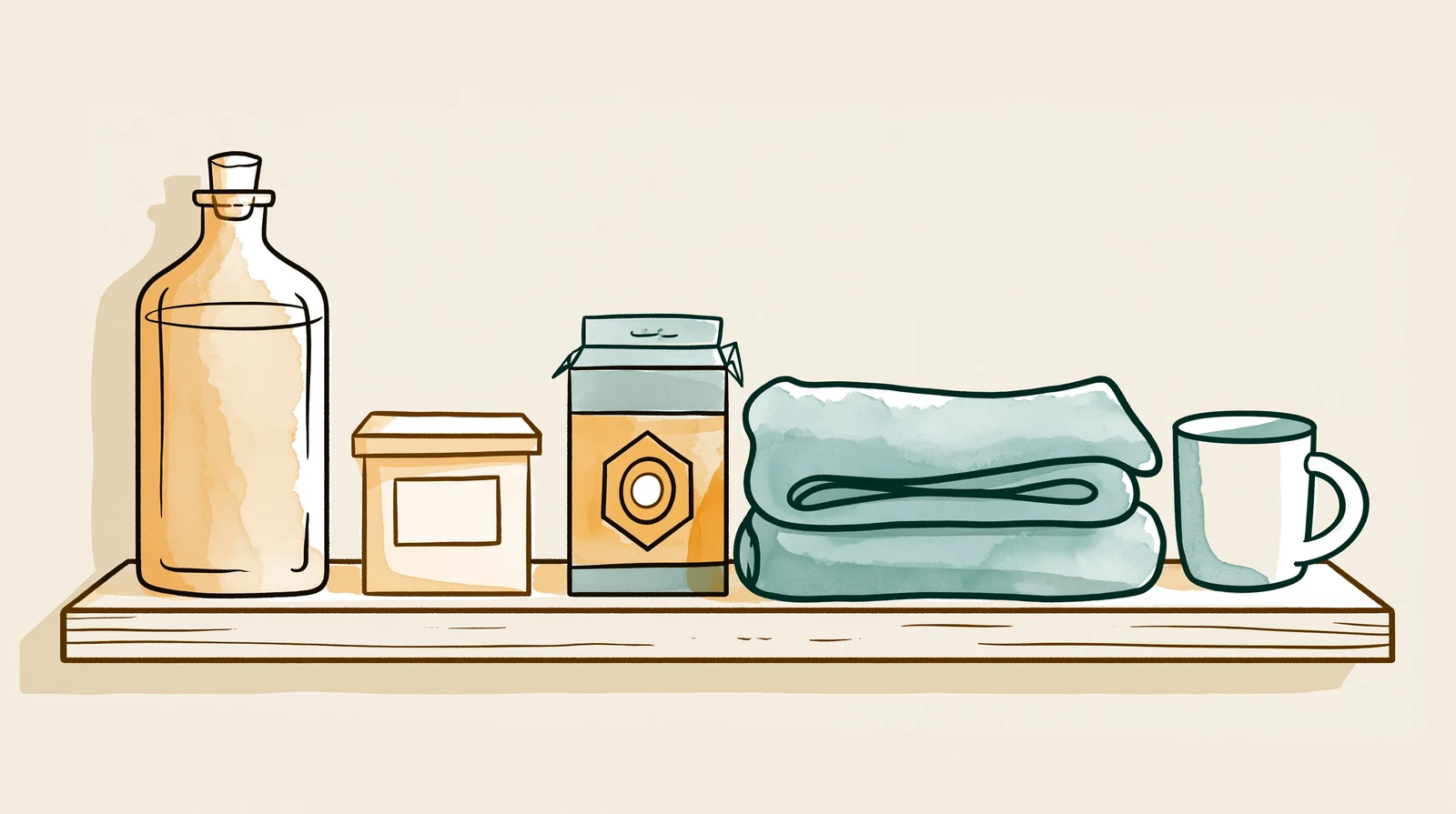
This costs about €12 and buys you enormous goodwill. Keep a few things at home: ibuprofen or her preferred painkiller, a heating pad or hot water bottle, her comfort food of choice, and tea if she drinks it. Ibuprofen genuinely outperforms paracetamol for cramps because it’s an NSAID, so it reduces the prostaglandins that cause the pain rather than just muting the signal (Cochrane Review). Heat works too, and works well: a clinical trial found continuous low-level topical heat as effective as ibuprofen for period pain (Akin et al., 2001). You don’t need to make a ceremony of it. Just have it there. The message that lands isn’t “I bought stuff,” it’s “he was thinking about me before I even said anything.”
3. Offer once, then let it go
Ask if she wants anything: heat, food, a painkiller, company, space. Ask clearly and genuinely. Then, whatever she says, believe her and act accordingly. Don’t ask again five minutes later. Don’t hover. If she says she’s fine and wants to be left alone, leave her alone. If she changes her mind, she’ll tell you. Constant checking-in reads as pressure even when it comes from a good place.
4. Don’t try to fix it
This is the hardest one for most men, including me. Period pain isn’t a problem you can solve. You can’t argue her out of it, distract her out of it, or find the right combination of suggestions that makes it stop. The urge to fix is natural, but here it reads as impatience. What she usually needs isn’t a solution. She needs you to be okay with the fact that she’s uncomfortable and to not need her to pretend otherwise. Sitting next to her, watching something, not making it a whole thing, is often exactly right. There’s a whole piece on this in how to be supportive when you can’t fix her pain.
5. Take over the logistics without being asked
If you live together or spend a lot of time together, cook dinner, do the dishes, handle the grocery run, cancel the plans that require a lot of energy. Don’t announce any of it as a special gesture. Just do it. The absence of friction is one of the most underrated forms of support there is.

6. Keep plans flexible
Don’t schedule high-energy, high-commitment activities for the days you know her period is likely starting. This doesn’t mean you cancel everything. It means you build in an exit. If you had a big social thing planned, offer a lower-key option too. If she’s feeling good and wants to go, great. If she’s not, you haven’t made her feel like she ruined the plans.
7. Don’t take the mood personally
Easier said than done, I know. But a lot of relationship friction around her cycle comes from men reading her withdrawn or irritable mood as something they caused, then either getting defensive or sliding into anxious people-pleasing. Neither helps. If she seems distant or short-tempered and you know it’s the week before her period, the most useful thing you can do is not add your own emotional reaction to the pile. Give her room. Don’t make her manage your feelings on top of hers.
Emotional support and logistical support are not the same thing
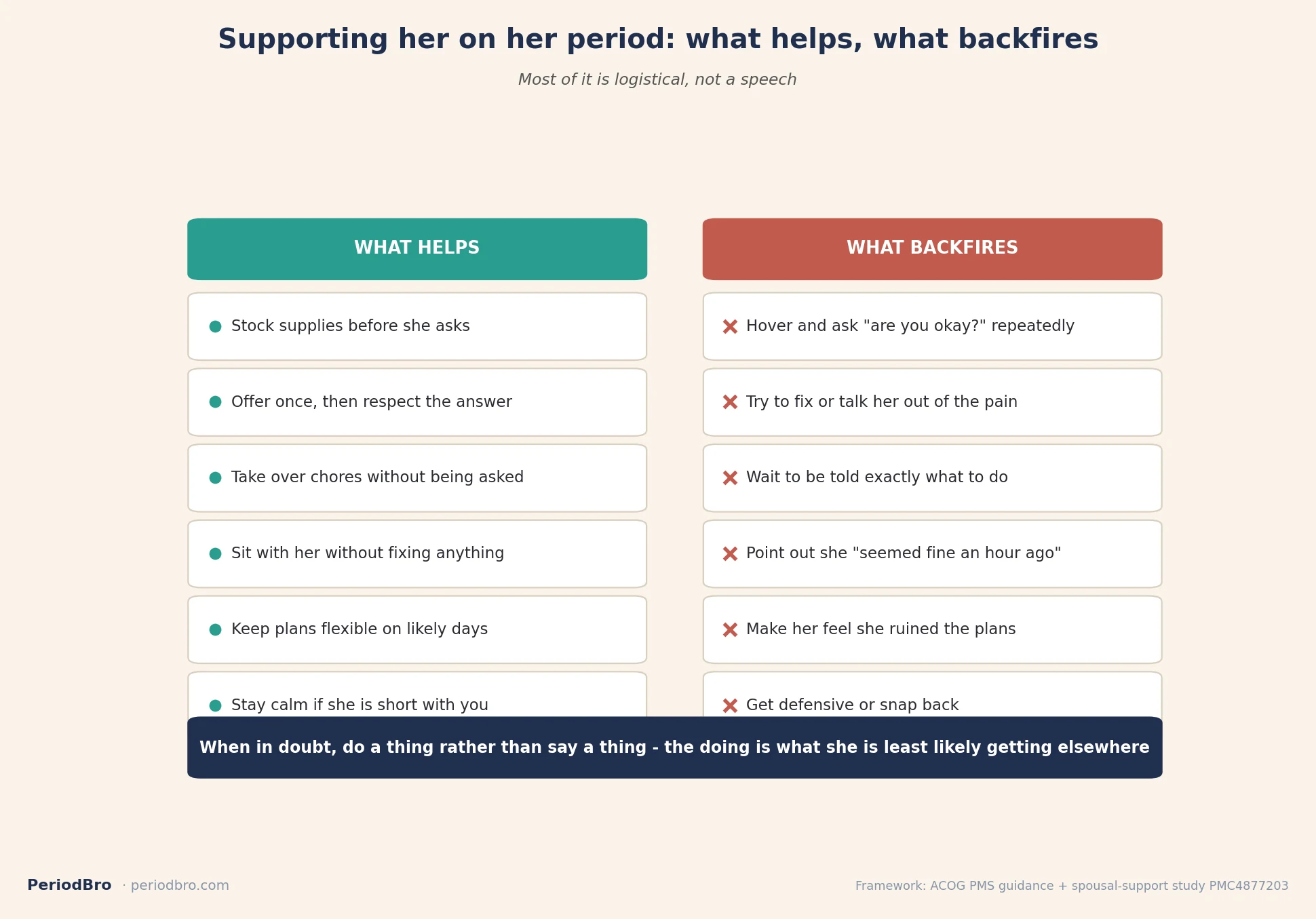
Most men, when they try to support a partner, reach for words. We want to say the right thing, give the comforting speech, talk her through it. But a lot of period support isn’t emotional at all. It’s logistical, and the logistical kind is the part men consistently underweight.
Emotional support is being calm, present, and non-judgmental when she’s low. That matters, and it’s mostly about what you don’t do: don’t panic, don’t fix, don’t take it personally. Logistical support is the invisible labor that makes the hard week lighter: the stocked cabinet, the dinner you made, the errand you ran, the plan you quietly made flexible. Women often carry that load for everyone else year-round, so when a man picks some of it up without being asked, it registers far more than another “are you okay?”
The rule of thumb: when in doubt, do a thing rather than say a thing. Refill the water glass instead of asking how she’s feeling. Both have their place, but the doing is the part she’s least likely to be getting from anyone else.
A field guide to specific situations
The principles are simple. The moments are where it gets real. Here are the situations almost every couple hits, and what actually helps in each.
She cancels plans last minute. Don’t sigh, don’t quiz her, don’t make her sell you on how bad she feels. “No problem, let’s do it another time, can I bring you anything?” The cost of a rescheduled dinner is nothing. The cost of making her feel guilty for her own body is a lot.
She’s snapping at you and you didn’t do anything. Resist the two bad instincts: defending yourself (“why are you mad at me?”) and counter-snapping. Lower your voice, give her space, and let it pass. If there’s a real issue, it will still be there in the follicular week when you can both actually talk. More on that in how to handle arguments before her period.
She’s in pain and you feel useless. You’re not useless. Heat, a refilled water glass, her painkiller, a dimmed room, and your calm presence are the whole job. You don’t have to fix it. You have to make the room she’s suffering in a little softer.
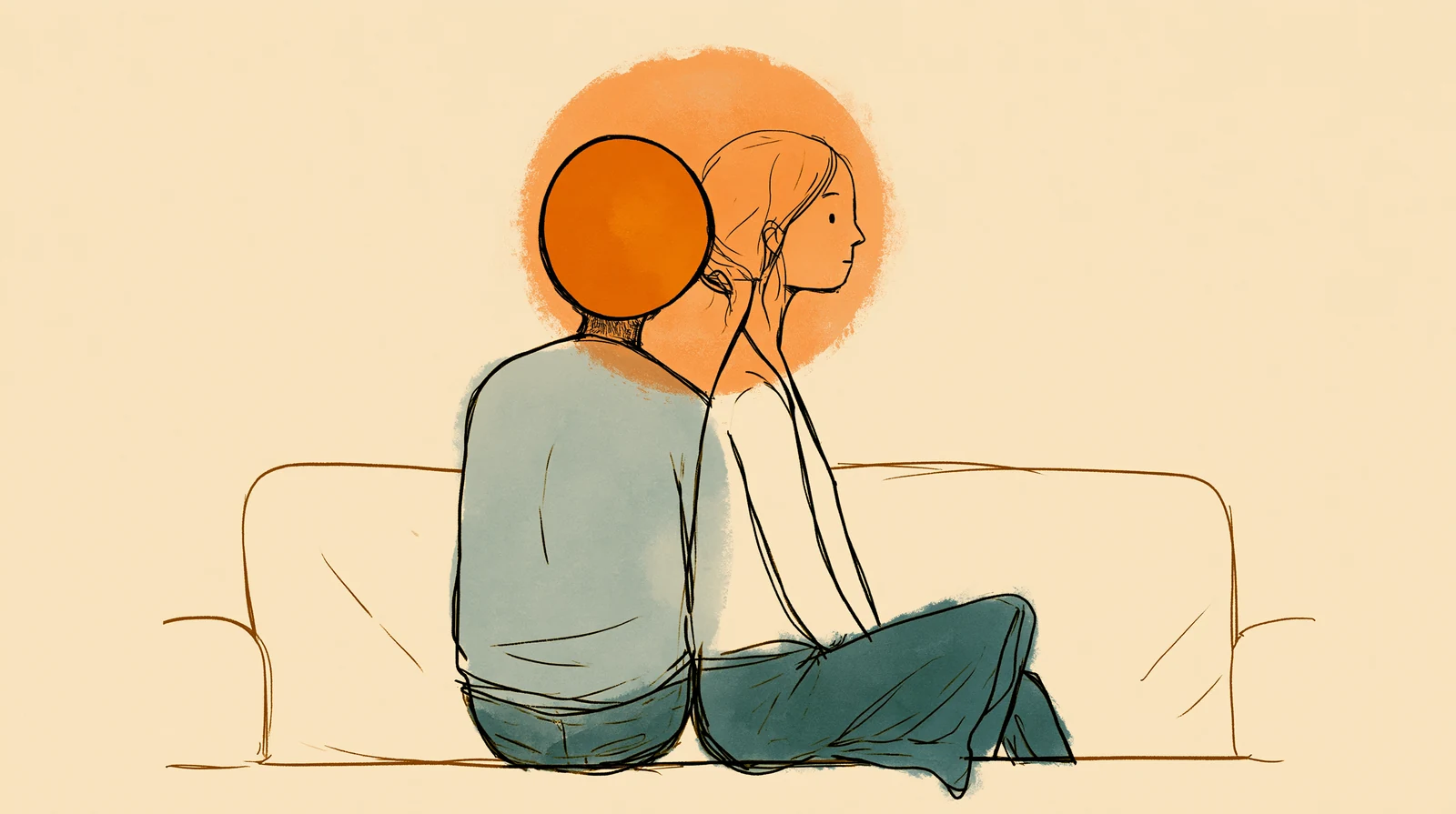
She says she’s fine but clearly isn’t. Take the words at face value but stay nearby. “Okay. I’m around if you want anything.” Don’t force her to admit she’s struggling. Make it easy for her to come to you when she’s ready.
She’s bloated or self-conscious about her body. Say nothing about her body, full stop. No reassurance about how she looks, no jokes, no commentary at all. Bloating is normal and it passes. Your job is to act like it’s a non-event, because to you it should be.
You’re long-distance or living apart. You can’t bring heat or do the dishes, so your currency is attention. A “thinking of you, hope today’s gentler” text on day one, not making her carry the conversation when she’s low, and remembering her cycle without being prompted all land hard precisely because distance makes them optional.

What to say
Words matter. These tend to land well:
- “Do you want company or space right now?” Gives her control without you guessing.
- “I made dinner. No pressure to eat with me if you’d rather be alone.” Practical support with zero obligation attached.
- “I’ve got ibuprofen if you want it.” Simple. Useful. Not a big deal.
- “We don’t have to talk. I’m just here.” Underrated. Presence without pressure.
- “Take your time. I’m not going anywhere.” Especially useful if she seems withdrawn or apologetic about how she’s feeling.
What not to say
Some things seem helpful but consistently make it worse:
- “Are you on your period right now?” Even if you’re right, this lands badly. It sounds like you’re filing her feelings under biology instead of taking them seriously.
- “You seemed fine an hour ago.” A useless observation that helps no one.
- “I don’t know what you want me to do.” Makes it about your frustration, not the moment.
- “Just try to relax.” If relaxing were available to her, she’d be doing it.
- “My ex never made a big deal out of this.” Do not say this. Ever.
Support changes as the relationship changes
The fundamentals are constant, but what good support looks like shifts with how long you’ve been together and how much of your lives overlap.
New relationship. You don’t know her patterns yet, and asking directly can feel heavy. Keep it light and low-key. Pay attention, stock a painkiller without making a speech about it, and let her set the pace on how much she wants to share. Awareness without intensity is the goal. The early move is mostly listening and not flinching.
Living together. Now the logistics matter most, because you share the space and the chores. This is where quietly absorbing the housework during her hard week, keeping the supplies stocked, and protecting her sleep become the bulk of real support. It’s less about words and more about the friction you remove.
Long-distance. Attention is your only currency, so spend it deliberately. Remember her cycle, check in on the low days without demanding a reply, and don’t make her perform “fine” over text. The effort reads as larger because the distance gives you an easy excuse not to bother.

Married, or with kids. The load is heaviest here and the margins are thinnest. Her hard week often collides with everyone else’s needs. The support that counts is taking the kids and the household off her plate for a few days without being asked, and not treating it as a favor you’re owed credit for. For the relationship-quality payoff of this kind of steady attentiveness, see how cycle awareness makes you a better partner.
When it’s more than PMS: supporting through PMDD
For most women, PMS is uncomfortable but manageable. For a smaller group, the premenstrual week brings something heavier: premenstrual dysphoric disorder, or PMDD. It’s not “bad PMS” in degree, it’s a recognized condition with intense mood symptoms such as severe depression, anxiety, anger, and hopelessness that genuinely disrupt work and relationships, then lift once her period starts (ACOG on PMDD).
If her premenstrual weeks involve that kind of darkness, especially any hopeless or self-critical talk that scares you, the support job changes. You can’t love someone out of PMDD, and you shouldn’t try to. What you can do is take it seriously, never dismiss it as “just her hormones,” help her track the pattern so the cyclical timing is clear, and gently support her in getting real care. PMDD is treatable, and the people living with it should not have to white-knuckle it alone. The difference between PMS and PMDD is worth understanding in full, which we cover in the PMS versus PMDD guide.

What’s normal, and when to gently suggest a doctor
Most period discomfort is normal and passes. But part of supporting her is knowing the patterns that deserve a professional, so you can encourage a visit without either panicking or brushing it off. It’s worth a doctor conversation if her cramps are severe enough to stop her life despite painkillers, if she’s soaking through a pad or tampon every hour or two, if her periods are wildly irregular or stopping for months at a time, if pain shows up well outside her period, or if her premenstrual mood symptoms are severe enough to derail her work or relationships.
None of that is about alarm. Conditions like endometriosis are common and under-diagnosed, and the most useful thing a partner can do is normalize getting it checked, the same way you’d want her to encourage you. Your role isn’t to diagnose. It’s to notice the pattern, take it seriously, and back her up if she decides to see someone.
The quiet trap: keeping score
Here’s a failure mode that catches thoughtful men specifically. You start showing up well. You stock the supplies, you take the chores, you hold your tongue during the hard week. And somewhere in there, a part of you starts keeping a tally, waiting for it to be noticed, waiting for credit. Then when the thank-you doesn’t come, or doesn’t come in the size you expected, resentment leaks in.
Drop the scorecard. Support that comes with an invoice attached isn’t really support, and she can feel the difference. The chores you do during her period are not favors she owes you back. They’re just what it looks like to be on someone’s team. If you find yourself privately tallying everything you did and feeling shortchanged, that’s worth noticing in yourself, because it tends to undo all the good the actions did in the first place.
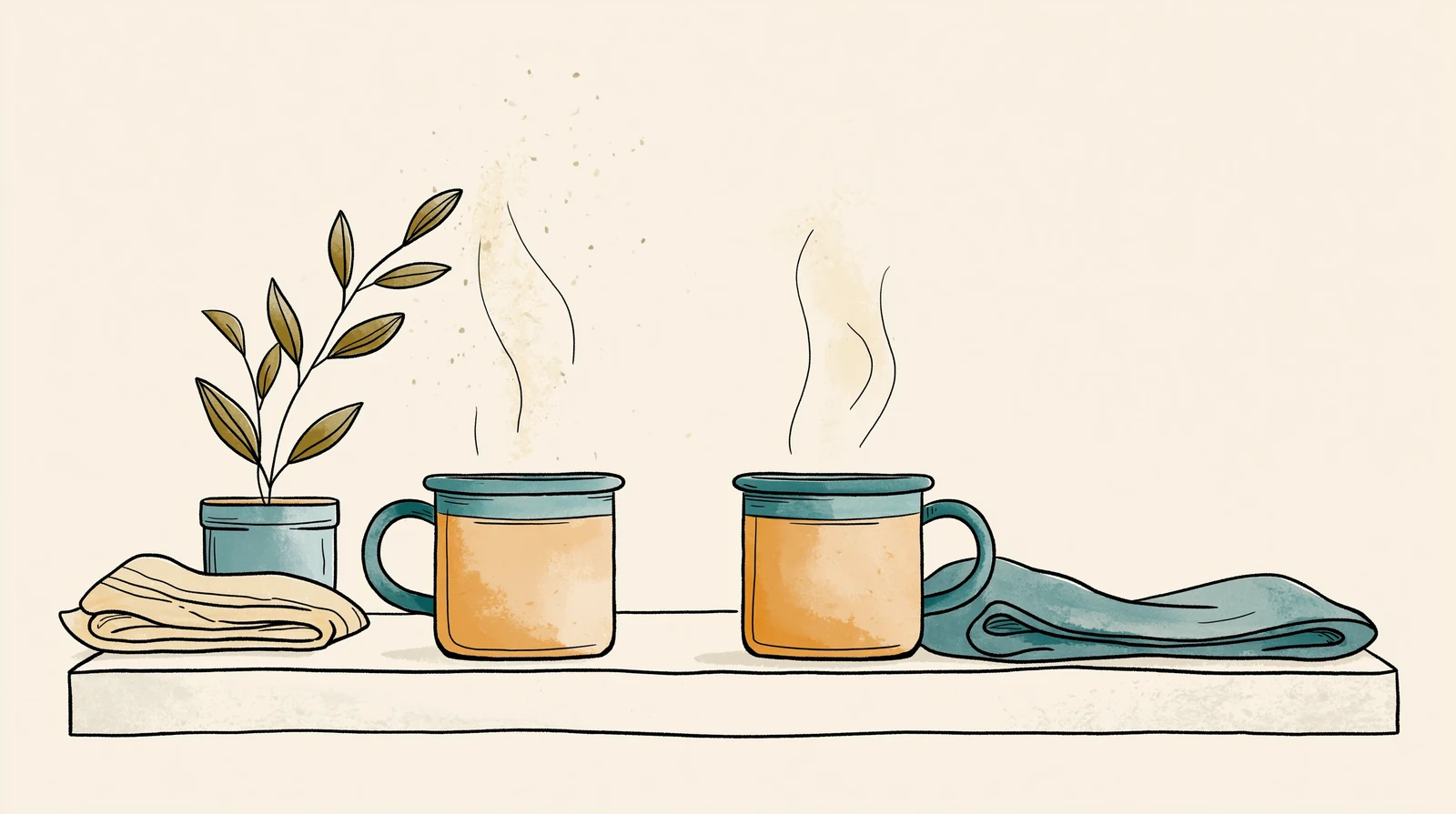
Do it because it helps her, not because it earns you something. The irony is that the men who stop keeping score are exactly the ones who end up appreciated, because the care reads as genuine instead of transactional.
The thing under all of this
Here’s what I eventually understood about how to support girlfriend on her period: the point isn’t to make her period easier for you to deal with. It’s to make her feel less alone in something that happens every month and that most of the men in her life have just ignored or waited out.
Women are used to managing this themselves, quietly, without making a fuss, often while also managing everyone else’s reactions to it. When you show up with even a basic level of awareness and preparation, it genuinely stands out. Not because the bar is high, but because for most men it hasn’t existed at all.
That’s the opportunity. Not to be perfect. Just to be present, informed, and not making it harder.
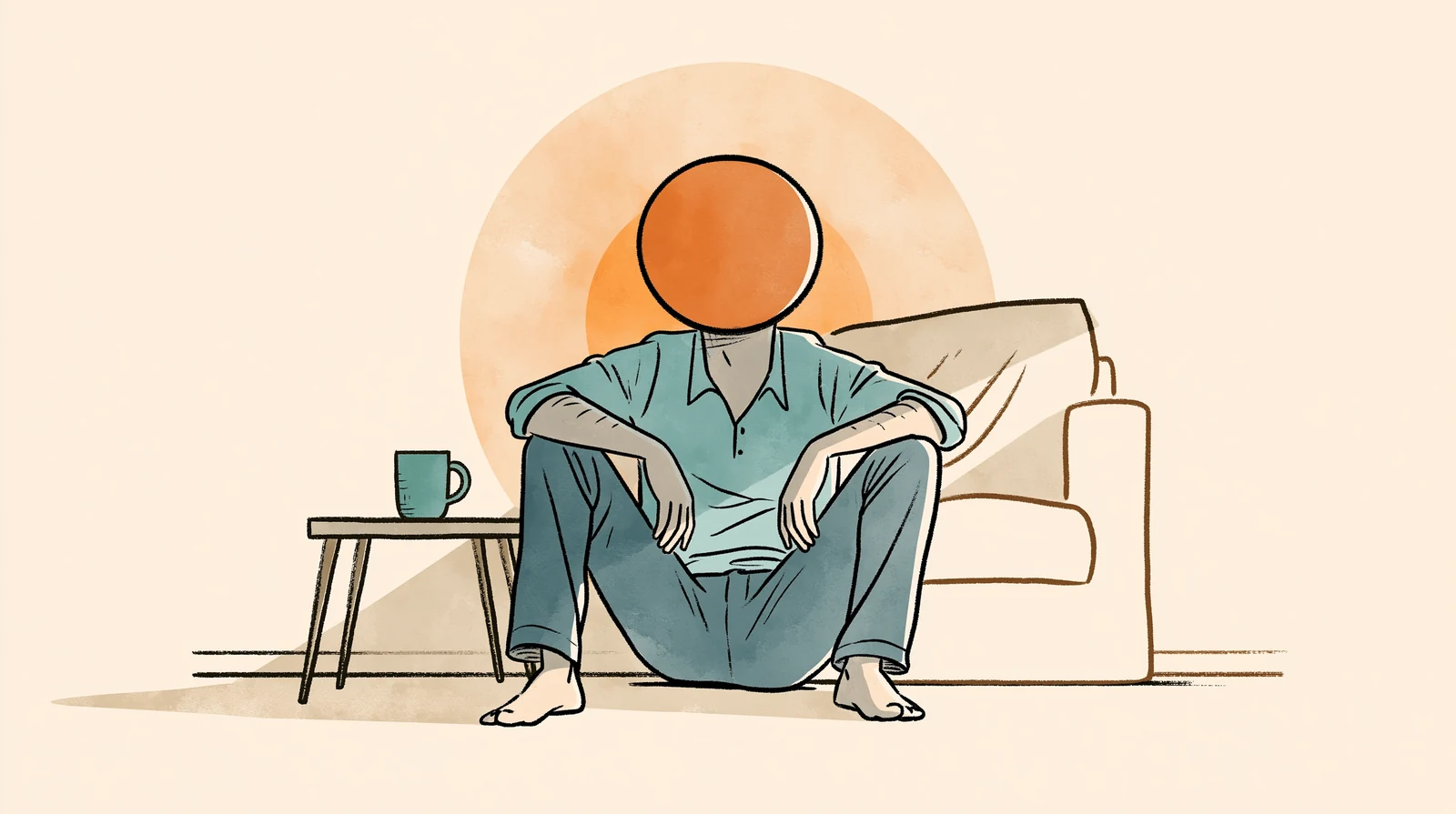
If you remember nothing else
Strip the whole guide down and it comes to five things. Know roughly where she is in her cycle, so her mood is information and not a mystery. Stock the basics before she asks, because the prepared cabinet says more than any speech. Offer once and then respect the answer, instead of hovering. Don’t try to fix the pain, just make the room around it softer. And don’t keep score. Get those five right and you’re already doing more than most men ever learn to. Everything else in this guide is detail on top of that spine.
Frequently asked questions
How do I know when her period is coming if she doesn’t tell me?
Track the start date of her last period. Most cycles run 21 to 35 days, so counting forward from the last start date gets you within a day or two. A tracking app removes the mental math and flags the hard week before it lands.
She gets angry at me during PMS. Is that normal, and what do I do?
Irritability is one of the most common premenstrual symptoms, and it’s usually not really about you. Don’t defend or counter-attack in the moment. Give space, stay calm, and revisit any genuine issue during the calmer follicular week.
What’s the single best thing to keep at home?
A heating pad or hot water bottle and her preferred painkiller. Heat performs about as well as ibuprofen for cramps, and having both within reach means she never has to ask.
Is it weird to track my girlfriend’s cycle?
Not if it’s consensual and for her benefit rather than surveillance. The line is transparency: she knows you’re doing it and why. We walk through that line in tracking her cycle with consent.
Should I bring up her period, or wait for her to mention it?
Don’t announce it or quiz her about it. The better move is quiet readiness: have the supplies on hand and offer help in a general way (“can I get you anything?”) without naming her cycle. If she wants to talk about it, she will. Naming it for her often reads as filing her mood under biology.
She says I make it worse when I try to help. What now?
Ask her, in a calm week, what actually helps and what doesn’t, then follow that instead of your instincts. Often “trying to help” means hovering or fixing, when what she wants is space and less friction. Support is what lands for her, not what feels supportive to you.
How is PMDD different from PMS?
PMS is uncomfortable but manageable. PMDD brings severe mood symptoms that disrupt daily life and need professional care. If her premenstrual weeks involve real darkness, take it seriously and support her in getting help.
Where to go next
This guide is the overview. Each of these goes deeper on one piece of supporting her well:
- How to help with period cramps – the practical pain-relief playbook.
- How to be supportive when you can’t fix her pain – presence over rescuing.
- Understanding PMS for men – why she’s not mad at you.
- How to handle arguments before her period – the de-escalation move.
- The best foods to stock before her period – the €12 grocery run.
- Menstrual cycle phases explained for men – the biology behind the map.
- How to be a better partner through her cycle – the relationship view.
If you want a way to make this concrete, to actually track her cycle, know what phase she’s in, and get specific suggestions for how to support her on a given day, that’s exactly what PeriodBro is built for. No pink UI. No fertility tracking. Just the information a man needs to stop guessing and start being useful.