How to Talk to Partner About Period (Without Making It Weird)
Most men have never been taught how to talk to partner about period — not in school, not at home, not from anyone. So we improvise. Badly. A few years ago I tried to bring up my girlfriend’s period and completely botched it. I don’t even remember exactly what I said — something about noticing she seemed tense and wondering if it was “that time of the month.” She went quiet in a way that told me I’d gotten it wrong, and we didn’t talk about it again for weeks.
I didn’t say it to be dismissive. I was genuinely trying to be aware, to show I’d been paying attention. But I hadn’t thought about how to say it. I’d just said it.
There’s a right way to have this conversation. And there’s a wrong way that closes the door for a long time. The difference usually isn’t about what you say — it’s about when, and why, and what you’re actually asking for.
How to Talk to Partner About Period: The Short Version
If you only read one paragraph on how to talk to partner about period topics: pick a neutral moment (not when she’s in PMS or menstruation), lead with curiosity about her experience rather than your own confusion, ask one open question, then shut up and listen. Don’t bring “I read that women…” into it. Don’t pitch a tracking system. Don’t ask “is this PMS?” mid-argument. Everything below unpacks why.
Why Most Men Avoid This Conversation Entirely
Most of us were never given a framework for talking about periods. It was treated as private female territory — something you didn’t bring up, didn’t ask about, definitely didn’t have opinions about. The message most men absorbed growing up was: periods are uncomfortable, acknowledge them as little as possible, and definitely don’t make someone feel self-conscious about something they can’t control.
That instinct isn’t malicious. It comes from a real place: not wanting to reduce someone to their biology, not wanting to make them feel like they’re being watched or managed. Those are considerate impulses.
But taken too far, silence becomes its own problem. When you never bring it up, you can’t prepare. You can’t ask what would actually help. You can’t understand what she’s going through. You’re just reacting — usually poorly — every month, and neither of you can talk about why. For a baseline on what she may actually be physically managing, ACOG’s overview of dysmenorrhea is a useful 5-minute read before the conversation.
What You’re Actually Trying to Achieve
Before you open the conversation, be honest with yourself about what you want from it. There are a few different goals that often get mixed together:
You want to understand her experience. What does her cycle actually feel like? Which days are harder? What symptoms does she deal with? This is the most legitimate goal, and it usually lands well when framed that way.
You want to know how to help. This is equally good — but make sure it’s genuinely about her, not about making yourself more comfortable when she’s struggling. “What can I do when you’re having a hard time?” is very different from “what should I do so this affects us less?”
You want to track her cycle. This is fine, but it’s worth being transparent about. If you’re going to use an app or keep mental notes, she should know. Not because you need permission, but because openness about this builds trust. “I want to be more aware of where you are in your cycle so I can be more supportive” is a sentence worth saying out loud.
The Setup Matters More Than the Script
Timing and context are everything. The worst time to bring this up is when she’s already in a difficult phase of her cycle — in the middle of PMS symptoms, exhausted, or emotionally depleted. That’s like trying to have a calm conversation about noise levels at a concert.
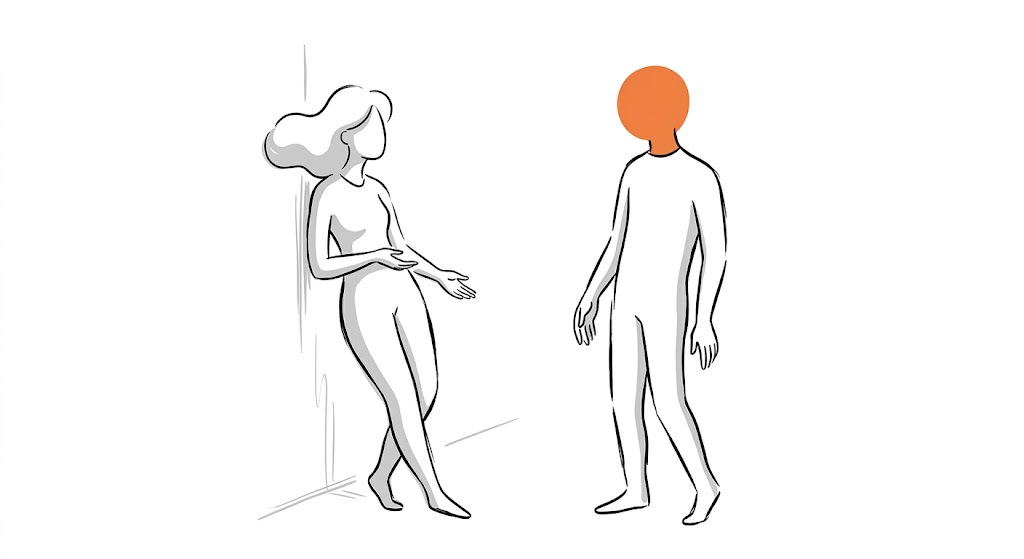
The best time is neutral: a relaxed evening, not in the middle of something else, when neither of you is stressed or in a rush. You don’t need to schedule it formally — that would be weird. But don’t ambush her with it during an already charged moment either.
The other thing that matters is your energy going into it. If you approach it with anxiety — like you’re confessing something, or bracing for a bad reaction — she’ll pick up on that. The goal is to be relaxed and genuinely curious. You’re not doing something controversial. You’re asking about her life.
What to Actually Say
There’s no perfect script for how to talk to partner about period topics. But there are some openings that tend to work, and some that reliably don’t.
What works:
“I want to be more aware of where you are in your cycle so I can actually be helpful when things are harder. Can you tell me what it’s like for you — which days are more difficult, what helps?”
This works because it centers her experience, names a concrete positive goal (being helpful), and asks an open question. It doesn’t assume she wants you to do anything specific. It’s an invitation to share, not a request for a system.
“I’ve noticed you have some days each month that feel heavier than others. I don’t always know what to do with that, and I’d rather ask than get it wrong.”
This works because it’s honest about your own limitation. You’re not pretending to already know what she needs — you’re acknowledging that you’ve been paying attention and want to do better.
What doesn’t work:
“Is it that time of the month?” — dismissive, even if you mean it neutrally. It reduces her current state to a biological explanation and implies you’re not taking it seriously.
“I read that women can be really emotional before their period, so I just want to check in.” — the “I read that women…” framing is condescending. You’re presenting information at her instead of talking with her.
“I just want to understand so I know what to expect.” — this one is subtle. It positions her cycle as something that affects you, that you need to manage for your own comfort. Even if that’s partly true, it’s not a good opening line.
When She’s Not Into It
Some women are completely comfortable talking about their cycles. Others aren’t — either because it feels overly medicalized, or because they’ve had partners who used this information in ways that felt patronizing or controlling, or because they just value privacy around it.
If she’s not particularly receptive, don’t push. One “this isn’t really something I want to discuss in detail” is enough. You can still be aware and thoughtful without her walking you through every phase. Observe, pay attention, notice patterns. Adjust without making her manage your learning process.
What you shouldn’t do is take a lukewarm response as evidence that the topic is permanently off limits. “I don’t really want to get into it” often just means “not right now” or “I’m not sure how this conversation is going to go.” Give it time. Come back to it differently.

What to Listen For
When she does talk about her experience, there are a few things worth paying close attention to:
Specific symptoms she mentions. Cramps, fatigue, headaches, mood shifts, food cravings, sleep problems — these are all real and physically driven. When she tells you about them, she’s giving you a map. Use it.
What has or hasn’t helped in the past. Some women want to be left alone when they’re struggling. Others want company but without pressure to interact. Some want practical help — someone to take over dinner, or bring a heating pad without being asked. Most people know what works for them. Ask and actually remember the answer.
How she describes it emotionally. “I just feel like everything is harder” is different from “I get genuinely depressed for a few days.” The second one is worth taking seriously and following up on — not to fix it, but to understand the weight of it.
After the Conversation
The conversation itself isn’t the point of learning how to talk to partner about period topics. What you do with the information is.
If she tells you that the week before her period is usually exhausting and she tends to need more space, remember that. Act on it. Don’t make her tell you again next month. Don’t make her ask for what she already told you she needs.
This is the thing that separates men who have the conversation from men who actually improve because of it. A lot of guys will ask, listen, nod, and then continue behaving exactly as before because they never connected the information to specific action. “I know she gets tired before her period” is not useful if it never translates into “so this week I’m handling dinner and I’m not going to schedule anything demanding of her.”
If you want a way to make that translation automatic — tracking her cycle, getting day-by-day suggestions for what she might need, having reminders before difficult phases — that’s exactly what PeriodBro does. Think of it as turning awareness into a habit.