Why She’s Not Mad at You: Understanding PMS from a Man’s Perspective
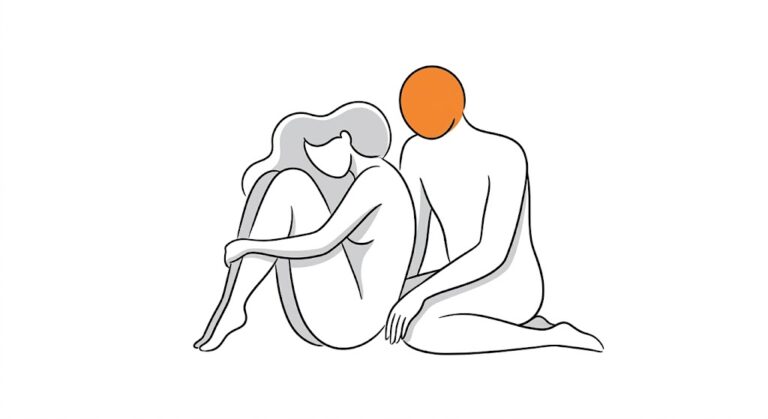
There’s a particular kind of helplessness that comes from being in a room with someone you love who is clearly struggling, and having no idea if you caused it, if you’re making it worse, or what — if anything — you’re supposed to do.
For a lot of men, that’s what the week before a partner’s period feels like. She’s short-tempered, or exhausted, or crying about something that seems small, and you’re running through every recent conversation trying to figure out what you did. Ninety percent of the time, you didn’t do anything. But without any framework for what’s actually happening, your brain fills in the blank with “it must be me.”
It’s usually not you. Here’s what it actually is.
What PMS Actually Is
PMS — premenstrual syndrome — refers to a cluster of physical and emotional symptoms that occur in the one to two weeks before menstruation begins, typically in the luteal phase of the cycle (roughly Days 15–28). It’s not one thing. It’s a collection of symptoms that vary enormously between women, and even between cycles in the same woman.
The most common physical symptoms include fatigue, bloating, breast tenderness, headaches, changes in appetite, and disrupted sleep. Emotionally, the most commonly reported experiences are irritability, anxiety, sadness, difficulty concentrating, and a general sense of being overwhelmed by things that normally feel manageable.
The underlying cause is hormonal. As progesterone and estrogen drop in the late luteal phase, they affect neurotransmitter systems — particularly serotonin and dopamine. This isn’t a metaphor. The neurochemical environment of her brain is genuinely different in this phase than it was two weeks ago. Her capacity to regulate stress and emotion is lower. Her sensitivity to friction — social, emotional, physical — is higher.
None of this is weakness. It’s physiology. And it’s happening on a monthly schedule whether either of you acknowledges it or not.
The “Mad at You” Misread
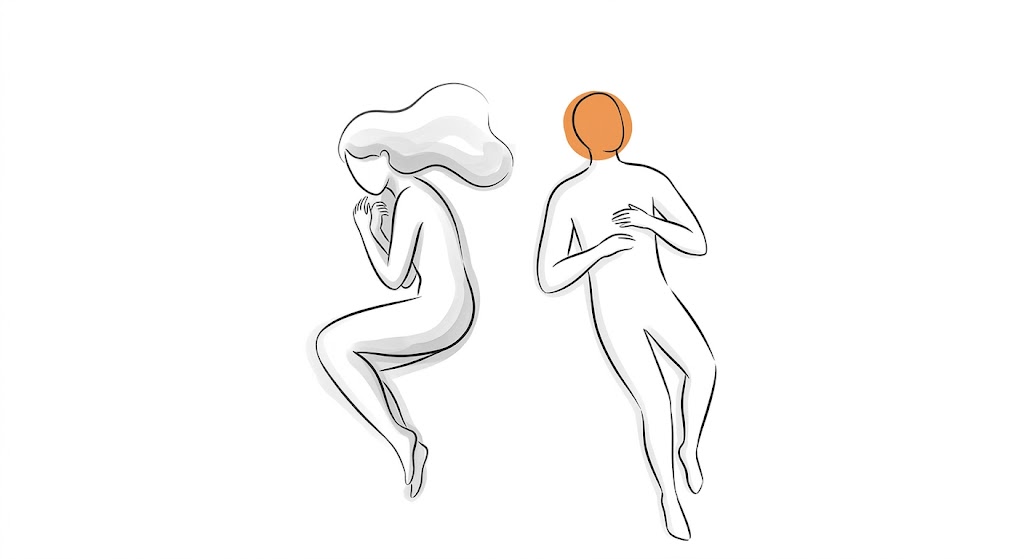
The reason men default to “she’s mad at me” is simple: irritability and withdrawal are the two main signals we’ve been trained to interpret as relationship problems. When someone goes quiet, or snaps at something small, we assume we’ve done something wrong. That’s a reasonable inference in most contexts.
But during PMS, those same signals have a completely different cause. The irritability isn’t directed — it’s ambient. The withdrawal isn’t about distance from you specifically; it’s about a nervous system that needs less input, not more. The reaction to something small isn’t about the small thing. It’s about a system that’s already running near capacity.
When you misread these signals as relational problems, you typically respond in one of two ways: you get defensive (which adds friction to a system that can’t handle friction right now), or you go into fix-it mode and start asking questions and offering solutions (which also adds friction, just in a different form). Neither response helps. Both make things worse.
The correction isn’t to ignore her. It’s to recognize that what she needs from you in this window is usually the opposite of what your instincts tell you to do.
What She’s Actually Experiencing
This is the part most men never hear, because most men never ask and most women get tired of explaining.
PMS is not just “feeling a bit emotional.” For many women, it’s a multi-day experience of feeling like themselves but with the volume turned up on everything bad — every insecurity, every unresolved tension, every piece of stress they’ve been managing gets amplified. Things they’ve successfully compartmentalized stop staying compartmentalized. Small annoyances become genuinely upsetting. Tiredness that was manageable becomes bone-deep.
At the same time, many women are acutely aware that these feelings are hormonally influenced — which adds a layer of frustration. She knows she’s more reactive than usual. She may feel like she can’t trust her own emotional responses. She’s simultaneously feeling everything more intensely and second-guessing whether those feelings are “real.”
Having a partner who treats this as drama, as something to be managed or waited out, makes this significantly worse. Having a partner who understands what’s happening — who doesn’t require explanation, doesn’t add their own stress to the pile, and adjusts their behavior without making a production of it — is, according to almost every woman who’s been asked, a genuinely meaningful difference.
The Difference Between Helpful and Patronizing
There’s a version of “I understand you have PMS” that is worse than not knowing. The patronizing version sounds like:
- “I know you’re going to be hormonal this week, so I’ll just let it go.”
- “You’re probably just PMSing, you’ll feel better in a few days.”
- “Is this the PMS talking or is this actually a real issue?”
These responses reduce her experience to a biological inconvenience you’re tolerating. They dismiss whatever she’s actually saying by attributing it to hormones. They’re condescending even when well-intentioned.
The helpful version doesn’t announce itself. You don’t tell her you know it’s PMS. You just quietly adjust: you’re less reactive, you handle more without being asked, you don’t pick this week to revisit a disagreement or make demands on her energy. You notice she’s struggling and you make her environment easier without making her feel observed or managed.
The goal is to be someone who makes this period of the month less hard for her — not to be someone who performs understanding at her while she’s going through it.

Practical Things That Actually Help
Concrete beats abstract. Here’s what tends to matter:
Reduce friction in the environment. Keep the house reasonably tidy, handle logistics without narrating them, don’t add decisions or requests to her plate. The less she has to manage externally, the more capacity she has to manage internally.
Don’t require her to explain herself. If she’s tired and wants a quiet evening, that’s not a problem that needs solving. If she’s irritable, you don’t need to understand exactly why before you adjust your behavior. Accept the signal at face value and respond accordingly.
Ask once, then drop it. “Is there anything you need?” is a reasonable question. Asking three times, or following up with “are you sure?”, is pressure. One genuine offer is enough. If she wants something, she’ll say so.
Manage your own state. If she’s short with you and you respond by sulking or getting defensive, you’ve now added your emotional state to her load. The most useful thing you can do in this window is stay regulated. Be steady. Don’t need the situation to be different than it is.
Don’t reschedule your entire life — just dial back demands. You don’t need to treat this week as a lockdown. Normal life continues. But if you have the option to push a stressful conversation to next week, push it. If you can handle dinner, handle it. Small adjustments, consistently, add up to something she actually feels.
When to Take It More Seriously
PMS exists on a spectrum. At the severe end is PMDD — premenstrual dysphoric disorder — which affects roughly 3–8% of women. PMDD isn’t just worse PMS. It can include severe depression, rage, panic attacks, and mood swings that genuinely disrupt daily functioning. Women with PMDD often describe feeling like a different person in the luteal phase — not just harder to deal with, but genuinely unlike themselves.
If what you’re observing each month looks less like difficult days and more like a complete personality shift that causes real damage to her life or your relationship, it’s worth naming what you’re seeing — gently, outside of the luteal phase — and suggesting she speak to a doctor. PMDD is treatable. Many women don’t know they have it because the medical community has historically been dismissive about severe menstrual symptoms.
Knowing the difference between “she has a hard week each month” and “she might be dealing with something that deserves proper support” is part of being a useful partner.
The Bottom Line
PMS is not a character flaw. It’s not drama. It’s not an excuse. It’s a monthly neurological event with predictable timing, predictable symptoms, and — once you understand it — a predictable set of things that help.
The men who figure this out stop experiencing the late luteal phase as a relationship problem that needs to be solved. They start experiencing it as a phase to be navigated — one where their role is to reduce friction, stay steady, and not make things harder than they already are.
That shift, from reactive to prepared, is what PeriodBro is built around. Track the cycle, get context before the hard days start, and know what to actually do — instead of figuring it out after things have already gone sideways.