Fathers’ Role in Menstrual Education: Why Dads Are the Missing Link
Fathers role menstrual education is the quietest gap in parenting research — and one of the most consequential. Here’s a finding from a grounded theory study by Kalman (2003) that stopped me cold: when adolescent girls in single-father households were asked who they’d call if scary kids approached them at a mall, almost all chose their father. When asked who they’d call if they’d been bleeding for three weeks straight? Zero percent chose their father.
Same girls. Same fathers. Same close, loving relationships. But when the problem involved menstruation, dad became invisible — not because he was absent, but because he was assumed to be incompetent. “He’s just a boy,” as one participant put it. “He wouldn’t know.”
This isn’t a story about bad fathers. It’s a story about unprepared ones. The fathers role menstrual education gap doesn’t come from indifference — it comes from no one teaching dads what to do. And the number of families affected is growing fast.
Fathers Role in Menstrual Education: Why This Matters Now
If “fathers role menstrual education” sounds like a research-paper phrase, that’s because it is — and that’s part of the problem. The topic only really exists in academic literature, not in parenting books or school programs. Most fathers don’t know there’s a body of research on this. They figure it out the way they figure out most parenting: by reacting, badly, the first time it happens. This article pulls the most useful pieces of that research into plain language.
The Invisible Families
Single-father households have tripled since the 1980s. What was once 666,000 households with 1.2 million children has grown to about 3.3 million American children — roughly 4.5% — living with their father only. Yet research on how these families navigate menarche — a daughter’s first period — remains what the literature calls a “dearth.”
These families are functionally invisible in health policy. Clinical guidelines assume a maternal figure is present. School curricula rarely address the single-father scenario. And fathers themselves often don’t know they need preparation until the moment arrives — by which point, the damage to the relationship dynamic may already be underway.

The Four Barriers Daughters Face
The Kalman study identified four dynamics that create what researchers call a “relational chasm” at puberty. Understanding these isn’t academic — it’s the difference between a father who stays connected and one who gets shut out without understanding why. These four barriers define the practical scope of fathers role menstrual education.
1. Close relationship, specific silence. Daughters describe being able to tell their dads “anything” — except this. General closeness doesn’t automatically extend to menstrual health. Without specific preparation, a father remains a “silent witness” rather than an ally, no matter how close the bond.
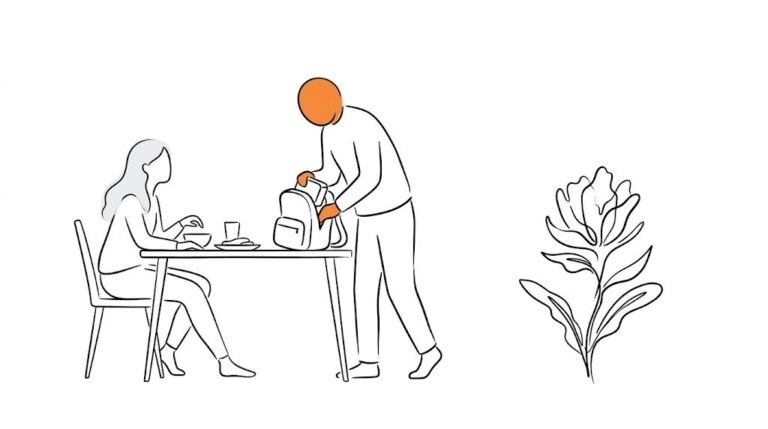
2. Pervasive embarrassment. Discussing menstruation with any male figure is described as “unthinkable” and “nerve-racking.” Girls report high anxiety about fathers even seeing menstrual supplies — snapping at them to stay away from backpacks, hiding products in bedroom drawers. This embarrassment prevents them from requesting essential supplies, leading to secret resource-gathering and inconvenient workarounds.
3. The credibility gap. Fathers are dismissed as “clueless” — not because they’ve proven themselves incompetent, but because they don’t share the lived experience of menstruation. One participant’s phrase captures it perfectly: a daughter with urgent questions but no credible outlet is like someone holding a “ballot without a ballot box.” The need to communicate exists. The trusted destination doesn’t.
4. Physical and emotional distancing. As puberty begins, a subtle withdrawal occurs on both sides. Daughters report feeling “insecure about their bodies” and suddenly finding physical contact with their father — hugging, tickling — as “weird.” This distancing happens at the exact developmental moment when the daughter most needs support, creating a cruel paradox: the time of greatest need coincides with the time of greatest distance.
What This Looks Like in Real Families
The research includes case studies that bring these dynamics to life. “Stephanie” described navigating menarche as “tiresome” and exhausting. Without a resident female role model, she and her father got into arguments because, as she put it, he “didn’t know a lot about it.” The absence of knowledge didn’t just create awkwardness — it created friction.
“Natasha” recounted feeling “weird” and “insecure” about her body as early as seventh grade. The biological shifts of puberty disrupted a previously easy emotional bond with her father. She didn’t have the language to explain what was happening, and he didn’t have the framework to ask.
In both cases, the problem wasn’t a lack of love. It was a lack of preparation — on the father’s side — and a lack of a credible outlet on the daughter’s side. The result: health questions get postponed indefinitely, reliance on potentially unreliable peer information increases, and the father-daughter relationship takes a hit at exactly the wrong time.

Beyond Biology: Why the “Clinical” Approach Fails Fathers
Most menstrual education — when it exists for men at all — takes a biomedical approach: anatomy, uterine lining, shedding, hormones. This is necessary but radically insufficient. Research contrasts this with a holistic model that acknowledges the psychosocial dimension: that menstruation requires not just biological understanding but practical infrastructure and emotional readiness.
For the fathers role menstrual education to actually work in real households, three concrete shifts are needed:
From anatomy to logistics. Knowing what the uterine lining does matters less than knowing which pads to buy, where to store them, and how to make the bathroom a comfortable space. Practical competence builds credibility faster than biological knowledge.
From reactive to anticipatory. Healthcare providers recommend that fathers of pre-menarcheal girls receive anticipatory guidance — preparation before menarche arrives. This means learning about the physical and emotional distancing that puberty triggers, so fathers can maintain communication through the transition instead of being blindsided by it.
From silence to vocabulary. Fathers who can casually use words like “period,” “cycle,” and “cramps” — without flinching, without euphemisms — signal to their daughters that this topic isn’t shameful. That single signal can be the difference between a daughter who asks for help and one who suffers in silence.
Why We Built Multi-Profile for This
Multi-profile in PeriodBro exists because of fathers like the ones in these studies. A dad can track his daughter’s cycle — not to surveil her, but to be prepared. To know that this week might be harder. To have pads in the house before she runs out. To not take it personally when she suddenly doesn’t want a hug.
The research says fathers aren’t incompetent — they’re unprepared. Multi-profile is preparation. It closes the credibility gap not by making a father an expert, but by making him someone who visibly cares enough to pay attention. And that visibility — that willingness to engage with something the world tells men to ignore — is what turns a “silent witness” into an ally.
You don’t need to have the perfect conversation about puberty. You need to be the dad who already bought the pads.
Sources: Kalman (2003), grounded theory study on adolescent girls in single-father families. US Census Bureau Current Population Survey (2020). Sommer et al. (2021), MHH and SDG framework. García-Egea (2025), male perspectives on menstrual health.