Luteal Phase Explained for Men: What’s Happening (And How to Show Up)
This is the luteal phase explained for men — written by one. I didn’t know what “luteal phase” meant until I was 35. Not a clue. I’d been in a long relationship, I’d watched people I cared about go through difficult weeks every month, and I’d just assumed it was… mood. Hormones. Something I wasn’t supposed to ask about.
The first time I actually looked it up, I felt a specific kind of frustration — not at myself, but at how easily this information had been kept from me. It wasn’t complicated. It wasn’t embarrassing. It was just biology. And understanding it changed how I interpreted a lot of things that had confused or stressed me out for years.
This is the article I wish someone had handed me at 25.
Luteal Phase Explained for Men: The 30-Second Version
If you only have a minute: the luteal phase is the second half of the menstrual cycle (roughly Days 15-28). Progesterone runs the show, then crashes in the last week, which is when most “PMS” actually happens. The reason this matters to you as a partner is that her mood shifts in this window are neurochemical, not personal — and your job is to reduce friction, not interpret signals. Below, the longer version of the luteal phase explained for men who want to actually do something with the information.
First: A Quick Map of the Cycle
A typical menstrual cycle runs about 28 days, though anywhere from 21 to 35 is considered normal (per ACOG’s guidance on normal cycle length). Most people think of it as having two states: “on her period” and “not on her period.” But there are actually four distinct phases, each driven by different hormones and each producing noticeably different physical and emotional states.
The four phases are:
- Menstruation (Days 1–5): The period itself. The uterine lining sheds. Estrogen and progesterone are both low.
- Follicular phase (Days 1–13): Overlaps with menstruation. Estrogen rises as the body prepares an egg. Energy typically increases, mood often lifts.
- Ovulation (around Day 14): The egg is released. This is peak estrogen. Many women report feeling their most energetic, sociable, and confident during this window.
- Luteal phase (Days 15–28): The phase most men have never heard of — and the one that explains the most.


What Actually Happens During the Luteal Phase
After ovulation, the follicle that released the egg transforms into something called the corpus luteum — a temporary structure that starts producing progesterone. This is the defining hormone of the luteal phase. Progesterone’s job is to prepare the uterine lining for a potential pregnancy. If no fertilization happens, the corpus luteum breaks down, progesterone drops sharply, and menstruation begins.
That progesterone surge — and its eventual crash — is responsible for most of what you’ve probably noticed but couldn’t explain: the shift in energy, the change in sleep quality, the sensitivity that wasn’t there a week ago.
Here’s what’s physically happening during the luteal phase:
- Body temperature rises slightly — typically 0.2–0.5°C above baseline. This is why she might feel warmer, sleep more restlessly, or feel generally “off” without being sick.
- Metabolism speeds up — calorie demand increases by roughly 100–300 calories per day. Cravings, especially for carbohydrates and sugar, are a physiological response, not a lack of willpower.
- Serotonin fluctuates — progesterone affects how the brain processes serotonin, the neurotransmitter associated with mood stability and emotional resilience. When progesterone drops in the late luteal phase, serotonin can drop with it.
- The nervous system becomes more reactive — sensitivity to stress, noise, and conflict increases. Things that felt manageable a week ago can feel overwhelming now. This isn’t fragility; it’s neurochemistry.
Why the Late Luteal Phase Is the Hard Part
The luteal phase isn’t uniformly difficult. The first half — roughly Days 15–21 — is often relatively stable. Progesterone is elevated but holding steady. Some women actually feel calm and grounded during this window.
It’s the second half — Days 22–28, sometimes called the late luteal phase — where things shift. Progesterone begins its descent. Estrogen also drops. Both serotonin and dopamine can dip as a result. This is the window associated with PMS symptoms: irritability, fatigue, anxiety, difficulty concentrating, breast tenderness, bloating.
For roughly 3–8% of women, this phase brings PMDD — premenstrual dysphoric disorder — which is significantly more intense and can include severe depression, panic, or mood swings that disrupt daily functioning. If the person in your life seems to experience something much more extreme than “a bit cranky before her period,” PMDD is worth knowing about.
But even without PMDD, the late luteal phase is a real, neurologically-driven shift. The emotional reactivity isn’t exaggerated. The exhaustion isn’t laziness. The tension isn’t about you.


What This Means for You, Practically
Here’s the luteal phase explained for men in practical terms — three things it changes:
1. You stop interpreting her mood as a verdict on you. When you don’t have a framework, a quiet or irritable partner becomes a problem you caused and need to solve. When you know she’s in Day 24 of her cycle, you have context. That context doesn’t mean you do nothing — it means you respond differently than if something were actually wrong between you.
2. You stop picking the wrong moments for hard conversations. The luteal phase — especially the late stage — is physiologically not the best time to revisit unresolved tension, have financial discussions, or push for decisions. Not because she can’t handle it, but because her nervous system is more reactive and less resourced right now. Wait a few days if you can. The same conversation often goes very differently in the follicular phase.
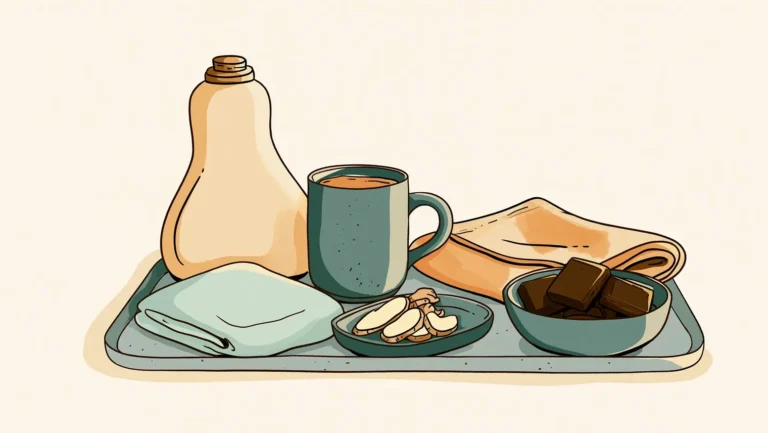
3. You can actually support her instead of just surviving it. “Support” during this phase looks less like grand gestures and more like friction removal: cooking dinner without being asked, not adding your own stress to her load, keeping the environment low-key, not requiring her to explain or justify how she’s feeling.

The One Thing Most Men Get Wrong About the Luteal Phase
The most common mistake isn’t neglect — it’s misinterpretation. When she goes quiet or short-tempered in that final week, most men do one of two things: they take it personally and get defensive, or they go into fix-it mode and start asking questions, making suggestions, trying to cheer her up. Both responses, however well-intentioned, tend to make things worse.
What usually helps most is simpler: presence without pressure. Being around, being calm, not needing the situation to be different than it is. If she wants to talk, she’ll talk. If she wants company, she’ll stay near. If she needs space, give her space without making her feel guilty for needing it.
This is, admittedly, harder than it sounds. Our instinct when someone we care about is struggling is to do something. The luteal phase teaches you that sometimes the most useful thing you can do is just stay steady.
How to Track It Without Making It Weird
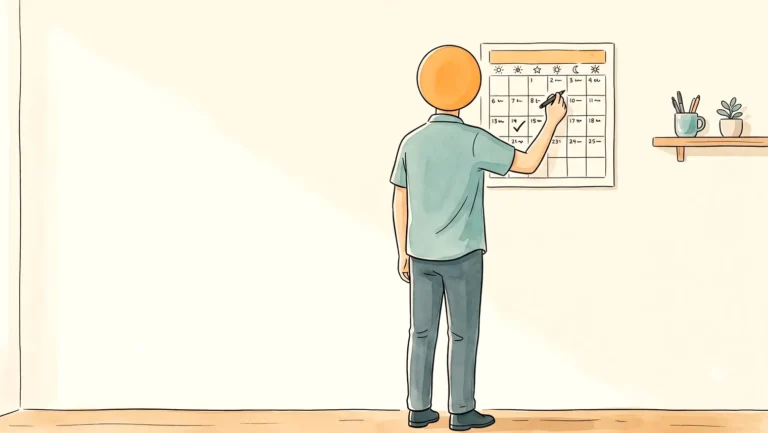
You don’t need her to hand you a spreadsheet or install an app on her phone. A menstrual cycle is roughly predictable. If you know when her last period started, you can estimate when the next luteal phase begins — usually around Day 15, roughly two weeks later. That’s enough to give you a working map.
Over time, you’ll start to notice her personal patterns — which days tend to be harder, what helps, what doesn’t. Some women have very predictable cycles; others vary more. The point isn’t clinical precision. The point is awareness: knowing roughly where she is so that you’re not blindsided, and so you can be more useful when it counts.
If you want the luteal phase explained for men translated into something you can actually use day-to-day — track the date, get a reminder when the luteal phase is starting, see specific suggestions for what to do on a given day — that’s exactly what PeriodBro is built for. No pink UI. No fertility tracking. Just a man’s tool for staying aware and showing up better.
The luteal phase is one quarter of the story – the whole cycle is laid out in our complete menstrual cycle guide for men.